 Skip to content

Disclosure: This article contains affiliate links to tours, tickets and other Sri Lanka travel services. If you book through one of them, we may earn a small commission at no extra cost to you. It never changes what we recommend.
There are some places in Sri Lanka where the sound of the traffic disappears, the air feels much cooler under tree canopies, and the only sound you hear is bird calls and water flowing over rocks. And as you can see from the title, the Sinharaja Rainforest is one of those places.
Located in the wet zone of the country, the Sinharaja Rainforest is known as the largest surviving area of primary tropical rainforest in Sri Lanka. It is also a World Heritage site. Known for its rich biodiversity. Unlike the national parks like Yala or Wilpattu, this rainforest has narrow forest trails with a canopy overhead that blocks much of the sunlight; you don’t need to hire a jeep here. Simply, you can walk through the trails with a guide.
As a Sri Lankan, I think Sinharaja is worth experiencing if you want to discover a different side of the country. However, visiting a rainforest requires more preparation than visiting a beach or a popular tourist attraction.
Therefore, here is everything you need to know about Sinharaja, how to get there, what to expect there and how to prepare for the trail.
Where is Sinharaja located?
Sinharaja Rainforest is located in the wet zone of the country, covering 3 districts. It’s a narrow forest patch running across the border of the Sabaragamuwa and Southern provinces. Therefore, there are several entrances on the northern and southern sides of the rainforest.
From the North side, there are two entrances, “Kudawa” & Morningside. Kudawa has a bird research centre and a conservation centre on this side of the forest. This has fewer visitors, as many visit the Sinharaja from the south side. Both of these entrances are famous for birding. There are mixed-species bird flocks that move through the canopy together.
From the south side, there are three entrances: “Pitadeniya”, “Kurulugala” and Lankagama. If you are staying in the southern area, these three would be good options for you. What you have to keep in mind is that these entrances are not interchangeable. Roads do not pass directly through the rainforest from one side to the other.


How to Get to Sinharaja Rainforest
If you are travelling from Colombo, the north side of the forest is the easiest for you to visit. “Kudawa” entrance is close to the Southern Expressway, so if you leave Colombo early in the morning, within 2-3 hours, you’ll reach the “Kudawa” entrance. Although the distance may not seem particularly long, the final part of the journey has smaller, narrow roads where you need to travel more slowly. An overnight stay near Kalawana is even better if you want to begin your hike early without feeling tired from the car ride.
If you are travelling from the southern coast, as many visitors do, you can find an entrance closer to the south of the rainforest. Lankagama, Piadeniya and Kurulugala are popular entrances if you are coming from Galle; it takes around 2-3 hours. This option works well if you want to combine your beach holiday with a rainforest experience.
Can I reach Sinharaja by Public Transport?
Yes. But you need to be very careful when you’re planning. Public transport is affordable, but it can take considerably longer. And the transport service is also limited in the smaller areas near the forest. If you are travelling through the Kudawa entrance, you can get public transport up until Kalawana, then you’ll have to find a vehicle to reach the final part of the route.
Confirm the return transport before starting your hike. You do not want to finish a long walk late in the afternoon and discover that you have no easy way to reach your accommodation.
Which Sinharaja Entrance Should I Choose?
Kudawa Entrance: Ideal for First-Time Visitors who love birding
Kudawa is a great choice if you’re coming from Colombo or prefer forest walks and birdwatching in a rainforest.
The area has well-established visitor facilities, and you can arrange guided walks along trails like Mulawella and Sinhagala, which are a little hard; these longer hikes require better fitness and more time.
Pitadeniya Entrance: Waterfalls and Forest with a landscape
Pitadeniya is a great option if you want to explore the rainforest and enjoy streams, waterfalls, and beautiful green surroundings rather than spotting birds.
To get there, you start from the Deniyaya side, and local guides can help you pick the best path based on the weather and your fitness level.
Some trips to waterfalls may involve more walking or longer journeys, so it’s a good idea to ask about the distance, the type of terrain, and how much time it will take before you decide on a route, as you can’t simply turn back when the route is getting harder.

Morningside: Best for a Cooler, Mistier Landscape on the Deniyaya side.
Morningside has a different feel compared to the lower parts of the rainforest.
Because it’s higher up, it’s usually cooler, and mist often rises from the hills around it.
But the roads there can be difficult, especially when it rains. Before you go, make sure you know what kind of transport you’ll need and what facilities are available.
For your first visit, I would suggest trying Kudawa or Pitadeniya unless you’re really interested in exploring the higher parts of the forest.
Things to Do in Sinharaja Rainforest
Walk through the rainforest
The main reason to visit Sinharaja is to walk through a rainforest.
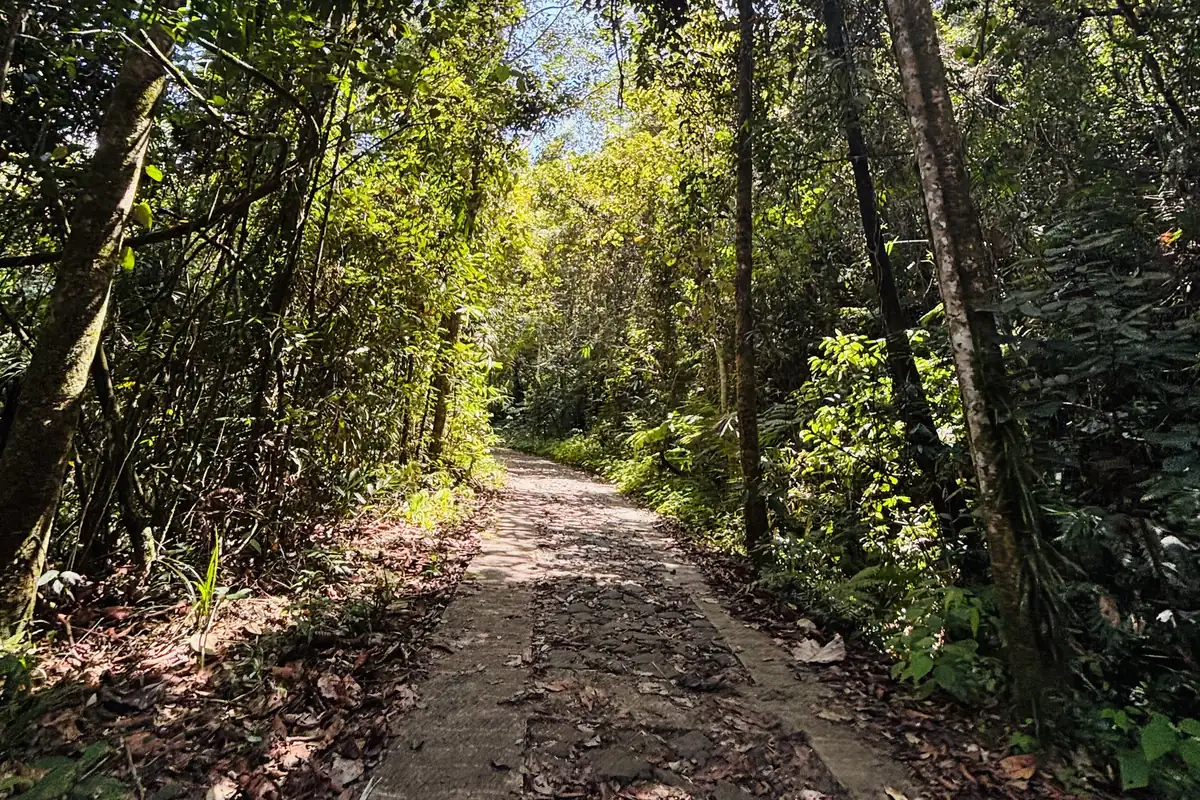
As you walk under the tall trees, you’ll see huge trees, hanging vines, and thick undergrowth with ferns and other moss-covered rocks and fallen logs. Sunlight only comes through the gaps in the tree canopy, and most of the year the forest floor stays wet. In Sinharaja, some parts are easy to walk, while others require more attention because the muddy paths and slippery roots can be tricky. When you enter the forest, choose a trail that suits your fitness level rather than trying to complete the longest one.


Birdwatching / Look for the wildlife
Sinharaja is known as one of the best places to see endemic birds. But the sightings are never guaranteed, as they move way faster through the thick canopy. So you’ll need to have your binoculars and telephoto lenses if you want to take photos of the birds.


But it’s not just birds. You can also look for amphibians, reptiles and other small animals. If you look carefully into tree trunks, you may notice lizards and sometimes a green pit viper that’s well camouflaged.


Visit a waterfall/ water stream
This actually depends on the entrance you are entering the rainforest. If you visit from the Lankagama or Piatadniya entrances, you have a chance of visiting a waterfall or a water stream.


What is the best time to visit Sinharaja Rainforest
Sinharaja gets rain all year, so you can’t really pick a dry month to visit. But January to March is often suggested before the monsoons. But this can also change, as the weather in this wet zone is very unpredictable.
So, if you are planning to visit, make sure you take raincoats with you.
Ticket counters open around 6 am. Closing times vary from 4:30 pm to 6:30 pm, so aim to be in by early afternoon at the latest.
What to wear and pack for Sinharaja?
Well, unlike the safaris, your checklist is very different here. Get sturdy walking shoes, leech socks and rain jackets. Also, a dry bag or a waterproof pouch can be very helpful if you want to keep your phone safe from the rain.
Should I buy a ticket, and also need to pay a guide?
The entrance fee for Sinharaja Forest Reserve is around LKR 1,500 for foreigners, depending on the entry point.
But a guide is required at every gate and is paid separately. Gate guides cost between LKR 2,000 and 4,000 for a half-day walk, depending on the group size, with some sources mentioning up to LKR 9,000 for longer treks. Private naturalists may include transport from your guesthouse, leech socks, and sometimes lunch, charging around LKR 6,000 per person.
For locals: the ticket is cheap, but the guide fee is the same for everyone, so it’s better to go as a group of four to six and split the cost.
If you’d rather have the transport and a guide arranged for you, you can book a private Sinharaja hike from Mirissa, with hotel pick-up.
Responsible tourism: How to protect Sinharaja?
Sinharaja is not just a tourist hotspot. It’s a very sensitive ecosystem that supports rare species and helps protect the water resources.
- Never litter; keep all your trash with you.
- Do not touch, feed or disturb wildlife.
- Avoid using loud music and unnecessary voice as you walk down the paths.
- Stay on the marked trails; do not enter the forest area.
Is Sinharaja Rainforest Worth Visiting?
While Sinharaja is not the ideal destination for all travellers, it does have some drawbacks. It can be difficult to hike on the trails when they are muddy; it can be difficult to predict the weather; and, of course, there are no large mammals living in a rainforest. However, if you are willing to take your time, get dirty, and look closely at what is happening around you, Sinharaja may provide you with a very memorable experience.
My recommendation is to select the most appropriate entrance to the park, spend at least one night there, hire a local expert to help you navigate the park, and do not rush through the forest simply so you can check it off your bucket list.


