Disclosure: This article contains affiliate links to tours, tickets and other Sri Lanka travel services. If you book through one of them, we may earn a small commission at no extra cost to you. It never changes what we recommend.
Amidst the hustle and bustle, there’s Thalpe Beach, tucked away in an isolated area en route from Galle to Matara. Believe me, travelers, once you see its charm, you won’t be leaving its beauty and history anytime soon. Why stray? Let’s explore what you should and shouldn’t do in Thalpe as a wanderer. It’s a lot.
Nostalgia at Talpe Beach, Sri Lanka
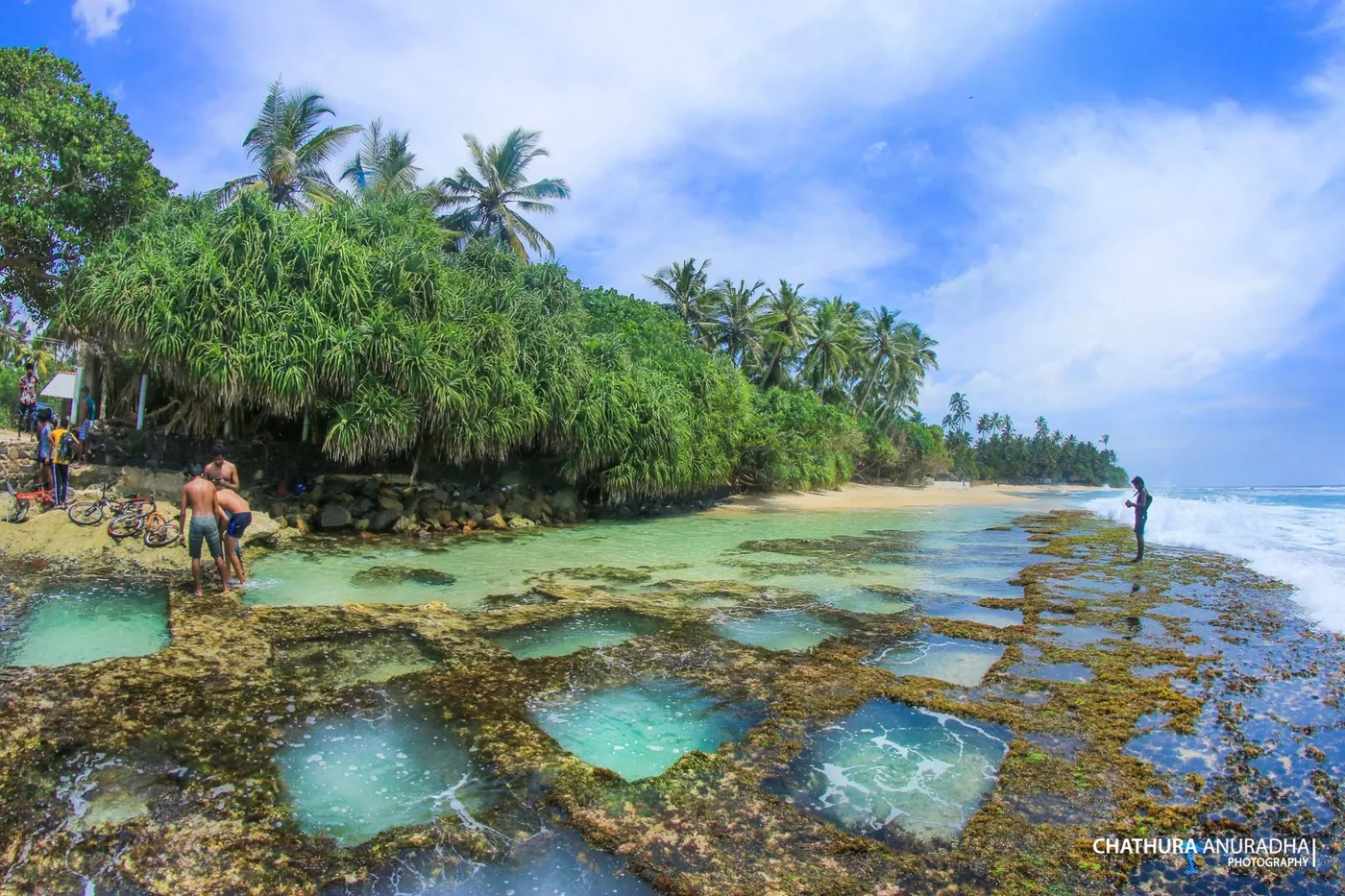
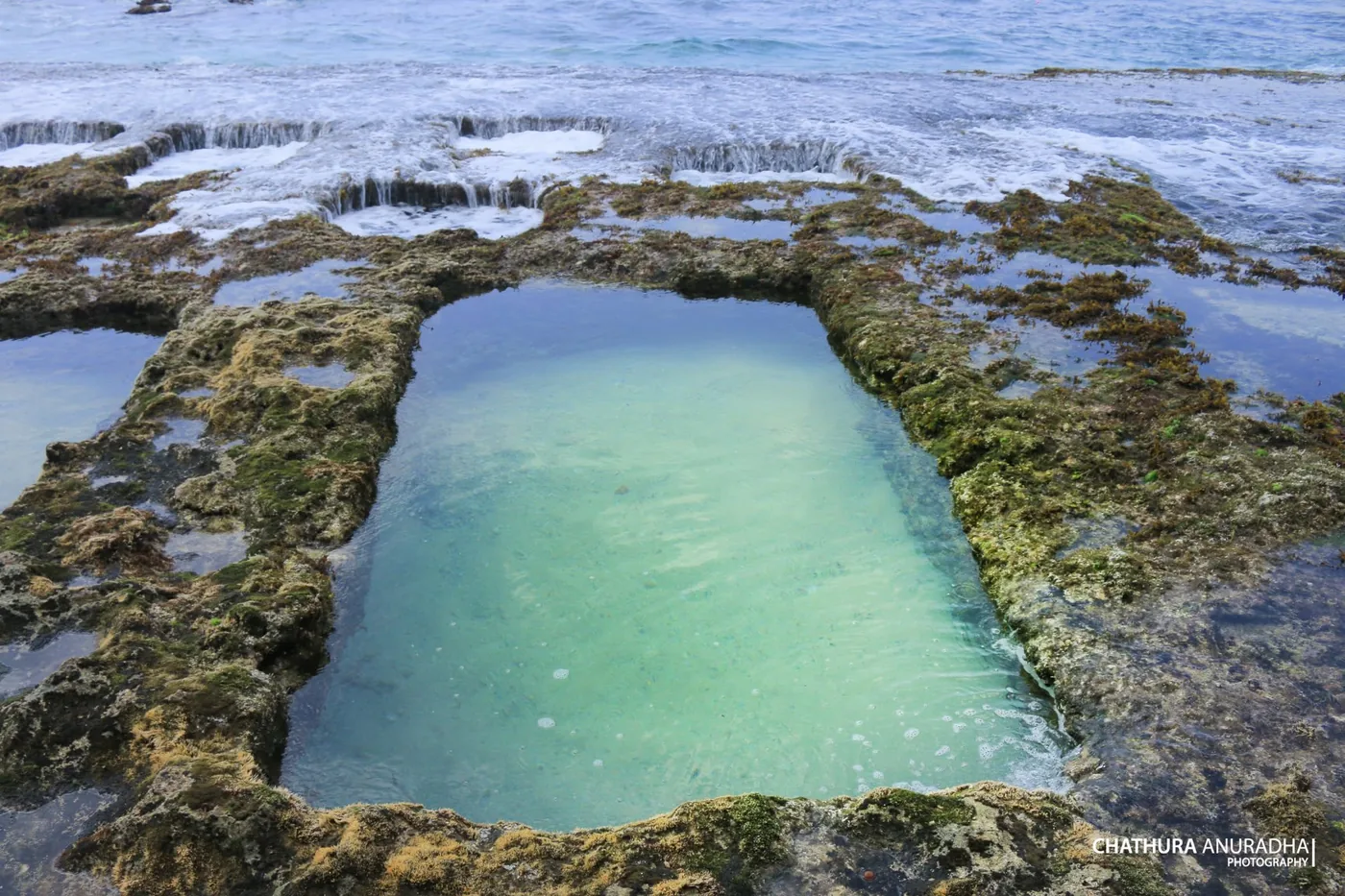
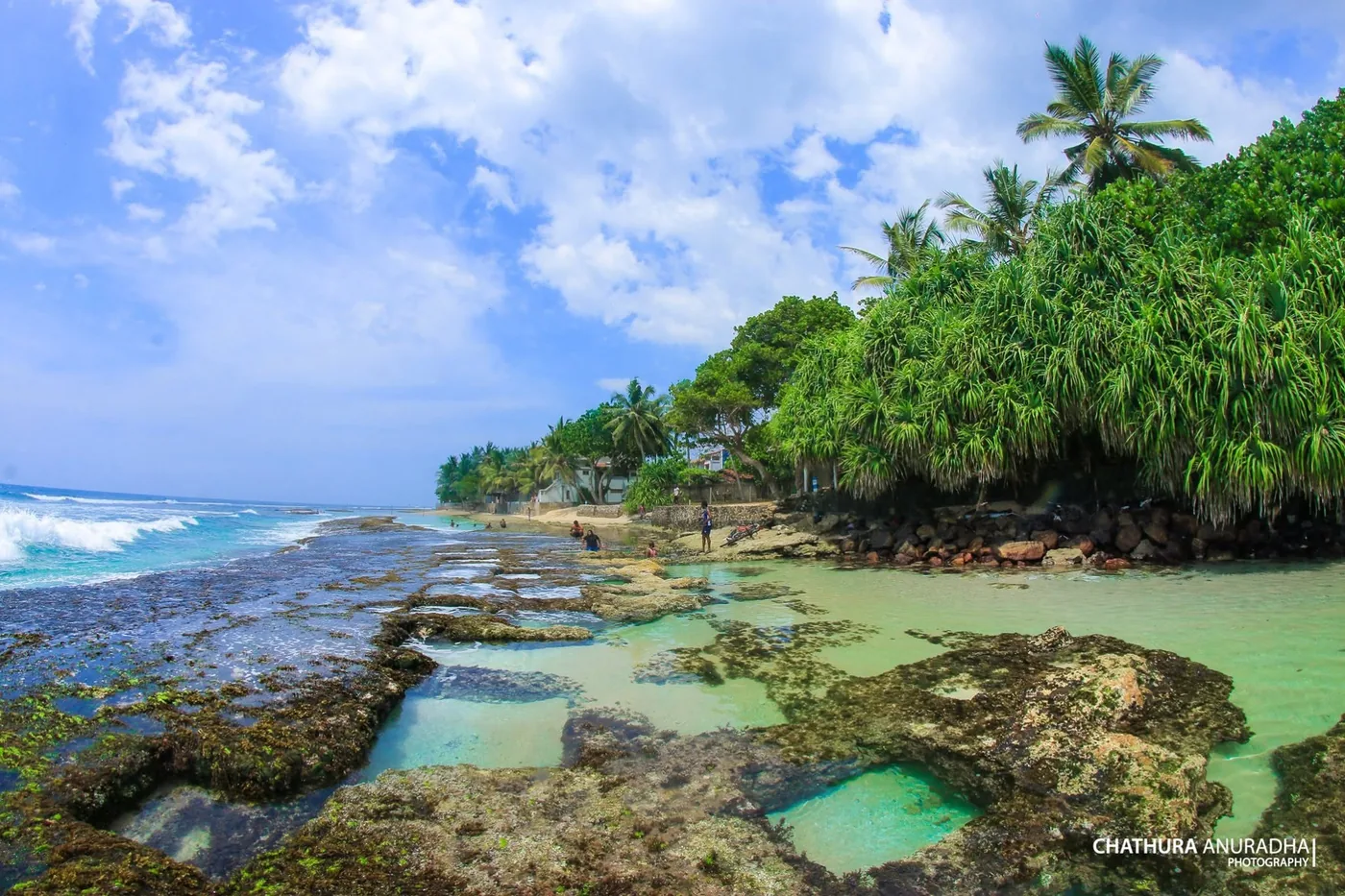
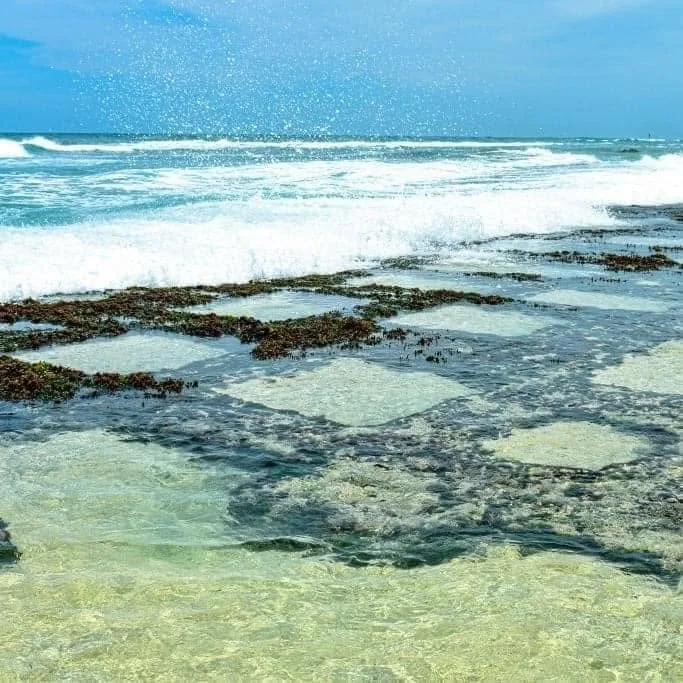
A few years ago, hardly anyone knew about this place as a travel destination. The villagers and fishermen were the only visitors at the time. Thanks to that mystery person who suddenly discovered its beauty, cleaned up the area, and shared some photos on social media. So, folks like us who always get wet for hidden treasures started flocking there, making vlogs, and sharing stories. It has a set of natural rock sea pools. Each of your group members can have an individual pool bath. Actually, each pool is large enough to accommodate at least three people at once. Besides, what is the fun of having an individual bath, eh?
These rock pools are carved into a long, dead coral reef. There are two sets of rumors buzzing around about its origin. Some adults from the area say these are natural pools, and even their great-grandparents swear they’ve seen this for ages. However, others believe this is man-made, and that people dug these square pits on this coral reef to soak coconut husks for the coconut coir industry, which was popular at the time. I raise my hand toward the second theory. As far as we know, this is the only place in Sri Lanka where seawater was used in the coir industry.
Finding Talpe
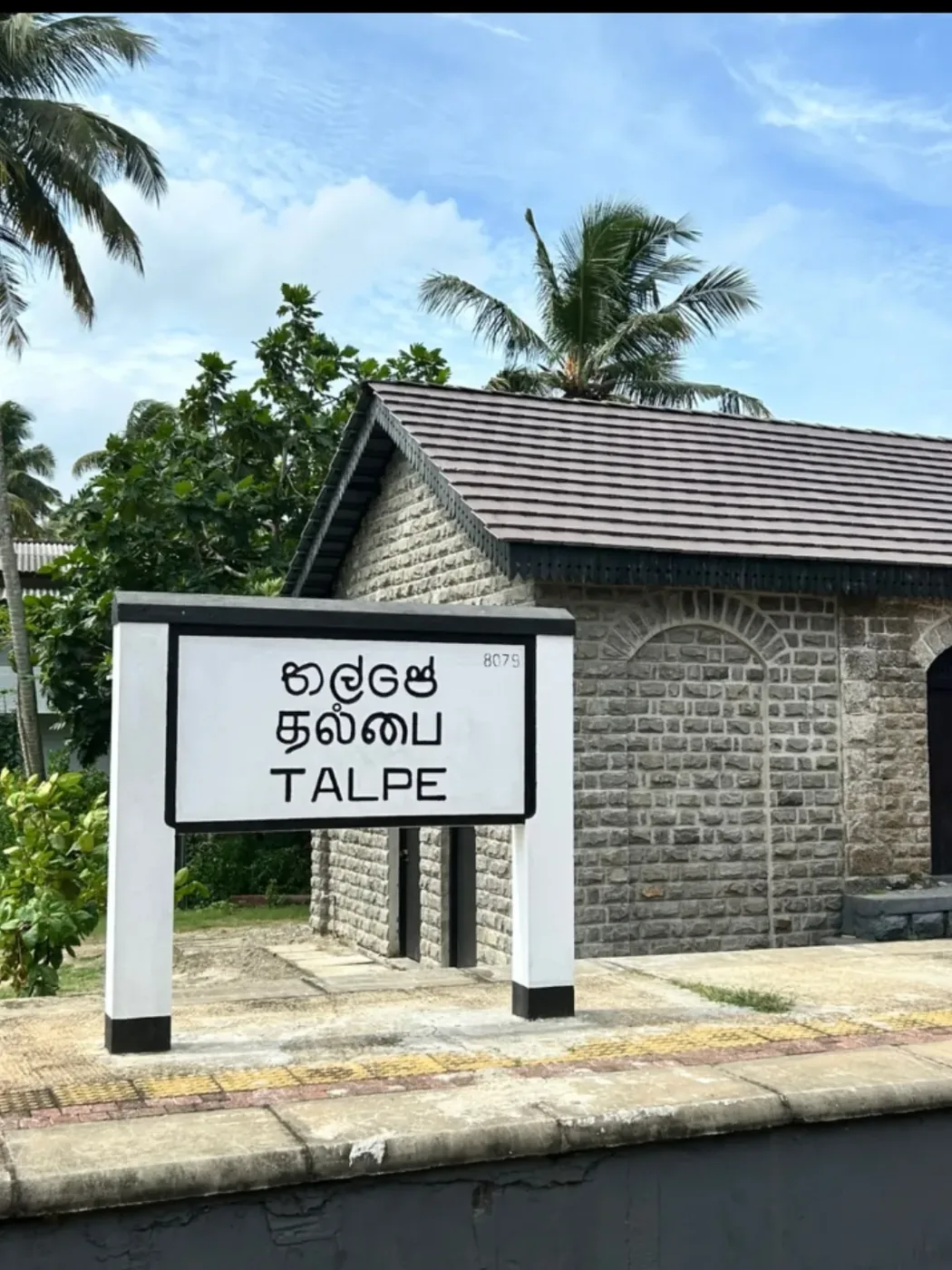
Set the Thalpe Beach location on your Google Maps destination as “Natural Pool Beach Thalpe.” Whether you’re coming by bus or by ride, it’s very easy to find. If you’re in Galle and looking for an adventurous visit, Thalpe Beach is just 11km from Galle. If you are taking the train from Colombo or Galle, your stop is Thalpe train station. Grab a tuk-tuk from that nice railway station, and Thalpe Beach is only 350 meters away.
Most visitors tend to stay around Galle, Unawatuna, or Weligama for the beautiful ocean views. If you’re staying somewhere close by, I’d suggest renting a scooter for around Rs. 1,500 for 24 hours. Thalpe Beach is about a 15-minute ride from Unawatuna and around 30 minutes from Weligama.
If you’re looking for a place to stay nearby, Unawatuna has the widest range of options close to Thalpe.
No entrance fee at all. The beach area has a parking facility for a reasonable price right on the premises. It is less than 1$ for a scooter. You’ll find washrooms for changing and freshwater bathing for 0.50$. And hey, don’t forget to try some local Thalpe cuisine, too.
Adventures in Talpe Beach Location
Other than its natural beauty and the display of colors, there is a bunch of fun stuff to do here. Where the rock pools were, there’s another large natural pool surrounded by an expansive coral reef where you can swim freely. If you crave a bit more adventure, dive to the bottom of the rock pool and swim underwater to the next one. Along the way, you’ll encounter a flock of colourful fish. For the best experience, rent a pair of goggles at the entrance for $1.
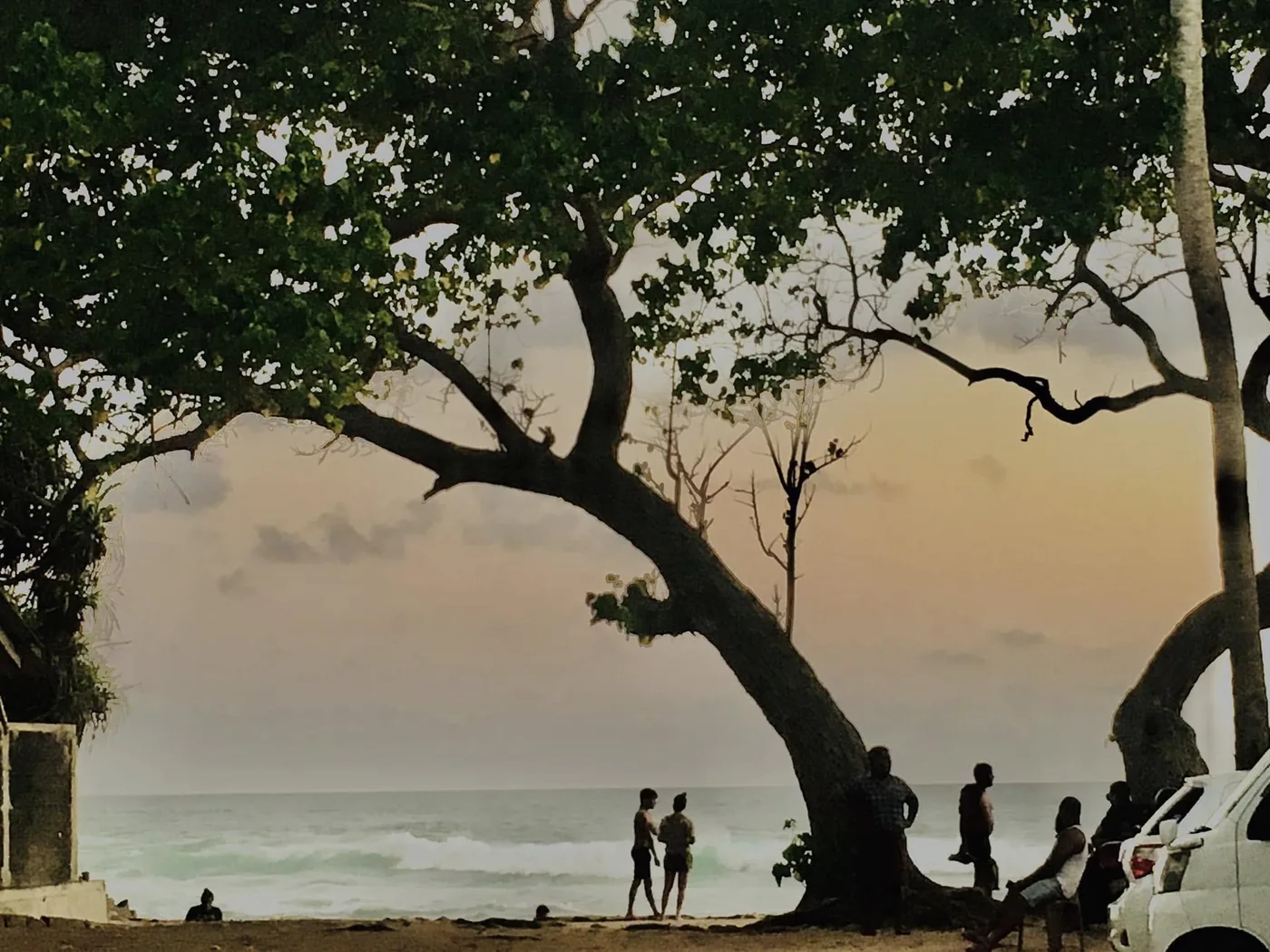
Then, there is this tire swing. Sit or stand, swing away, and capture the perfect Instagram shot. Check out the tree reaching down to the beach for an aesthetic photo with its sprawling branches. Sit on the pool’s edge for another perfect shot. If you’ve got a drone, consider yourself lucky. You might even spot a few stilt fishermen and see how the Pandanus palm trees line the beach. Dive a little in the safe areas, and you’ll discover a world of colourful fish, corals, and moss, all coming together to create a beautiful blend of biodiversity.
Caution: Sea Urchins ahead
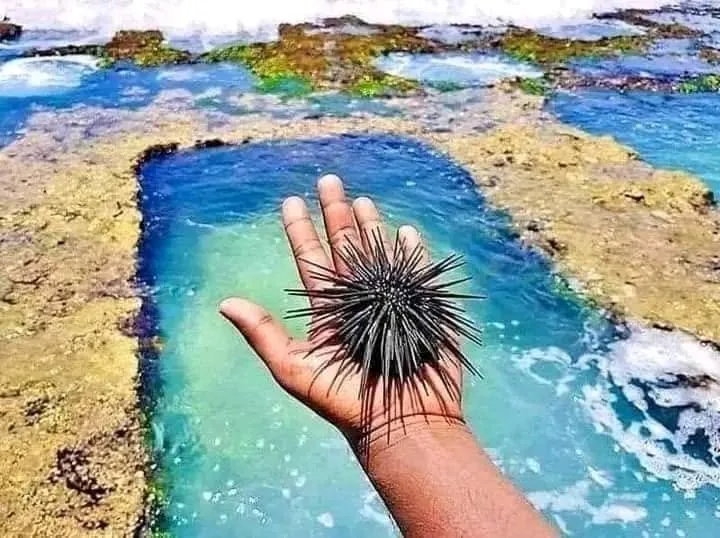
This place is all about green and blue hues, crystal-clear waters, powerful waves, and sea urchins. Sea Urchins? Oh yeah. A bit of heaven and hell at the same time. Those little black balls with scary, spiky thorns can give you your worst day on earth, so be careful. Sometimes they hang out in the pools, sticking to their inside walls and along the coral reef. Be cautious when walking on it too.
But the locals, who make a living here, confirm that they’ve been removing those sea urchins, so there’s no need to worry. Yet, prevention is better than cure. I’ll always be careful about these creatures because I’ve seen the worst that can happen. You can’t handle it without a hospital visit. A lot of blood, and so painful to witness.
Talpe Beach: Safety Manual
Most of the rock pools have water up to your shoulder height. The pools fill with seawater when the waves roll in, quite fast and sometimes as high as 10–12 feet. They break when hitting the coral reef. As I mentioned earlier, the waves are so strong. If your gut says to go back to the ground, do it. Even the villagers advise not to stay in the pool during strong waves. Also, watch out for the rough rock pool walls, especially the edges. You can’t expect to escape without a bruise if a powerful wave drags you from one corner to the other. There are some shallow pits closer to the beach, perfect for your kids.
They say danger hides in beauty, and beauty is in danger. Thalpe Beach is a place that proves it. Unfortunately, it has seen several local and foreign deaths due to drowning. Don’t go beyond the parameters marked with flags and lines. There’s a lifeguard for emergencies, but it’s best not to test the waves. Walking on the reef should be done carefully. The moss can be slippery, and the sea waves may throw off your balance.
Ideal visiting hours for Talpe
More people visit on weekends than on weekdays. But still, Thalpe Beach isn’t as busy as other southern beaches. The ideal time to visit Thalpe Beach, Sri Lanka, is from March to April because at other times, the pools are filled with sand. Locals work to keep the place user-friendly and welcoming for visitors. They manually remove the sand if the pools have filled with it. Mornings are the best, especially before 12, when the waves are a bit calmer.
Top Attractions Around Talpe Beach, Sri Lanka
The southern coast will never disappoint you. When you decide to visit this part of Sri Lanka, you’re getting a whole package, with travel destinations and tourist attractions scattered all along the coastline. Let me list a few of them for your convenience.
| Location | Distance from Thalpe |
|---|---|
| Dalawella Beach | 1.6 km |
| Sea Turtle Hatchery, Habaraduwa | 3 km |
| Yatagala Raja Maha Viharaya | 3.3 km |
| Unawatuna Beach | 3.4 km |
| Japanese Peace Pagoda, Rumassala | 4.7 km |
| Jungle Beach, Rumassala | 4.7 km |
| Koggala Lake Boat Safari | 4.8 km |
| Stilt Fishermen, Koggala | 5.9 km |
Goodbye, Talpe
Take a break from the urban buzz and discover the solace in the southern sands. Thalpe Beach is a place that will never disappoint you. If you are in the vicinity, consider visiting Thalpe Beach from Galle or Weligama. As you bid farewell, carry with you the memories of a day well spent and a communion with nature. Let the echoes of the waves linger in your thoughts, serving as a reminder of the tranquility found in this coastal sanctuary.
FAQ
1. Where is Thalpe Beach in Sri Lanka?
Thalpe Beach is on Sri Lanka’s southern coast in the Galle District, between Unawatuna and Koggala. It is a short drive from Unawatuna and Galle, making it an easy stop on a South Coast itinerary.
2. What is Thalpe Beach famous for?
Thalpe Beach is best known for its distinctive rectangular rock pools along the coral reef. These pools are one of the main reasons visitors come to Thalpe for a quieter coastal experience.
3. Is Thalpe Beach crowded?
Thalpe is generally quieter than popular nearby beaches such as Unawatuna, making it a good choice if you prefer a more relaxed atmosphere.
4. Is Thalpe Beach safe for children?
Families can enjoy the area, but children should be closely supervised around the rock pools and reef. The rocks can be slippery and sharp, and sea conditions can change quickly.
5. How do you get to Thalpe Beach from Galle?
You can reach Thalpe from Galle by bus, train, tuk-tuk, taxi, or private vehicle along the southern coastal road. A scooter is another convenient option if you are comfortable riding in Sri Lanka.
6. What should you take to Thalpe Beach?
Bring swimwear, a towel, drinking water, sunscreen, and footwear suitable for walking over rocky surfaces.
7. Are there other attractions near Thalpe Beach?
Yes. Thalpe is well positioned for visiting attractions around Unawatuna, Galle, Koggala, and Rumassala, including Galle Fort, Unawatuna Beach, the Japanese Peace Pagoda, Koggala Lake, and the stilt fishermen.
8. Is Thalpe Beach worth visiting?
Yes, particularly if you want to experience a quieter part of Sri Lanka’s southern coast and see the unusual rock pools. It is especially worthwhile as part of a wider trip covering Galle, Unawatuna, Koggala, and nearby beaches.