Disclosure: This article contains affiliate links to tours, tickets and other Sri Lanka travel services. If you book through one of them, we may earn a small commission at no extra cost to you. It never changes what we recommend.
This time, we’re heading underground. Before we begin, a quick word of warning. If darkness or tight, enclosed spaces make you uneasy, now is the time to decide whether you’re up for it. Scary? A little. But that’s part of the thrill, and there are plenty of challenges and surprises waiting in the dark. To get you started, here’s your complete guide to Nil Diya Pokuna, with every detail you need before you descend.
Ready? Then let’s go!
The Legend and Mystery Behind Nil Diya Pokuna
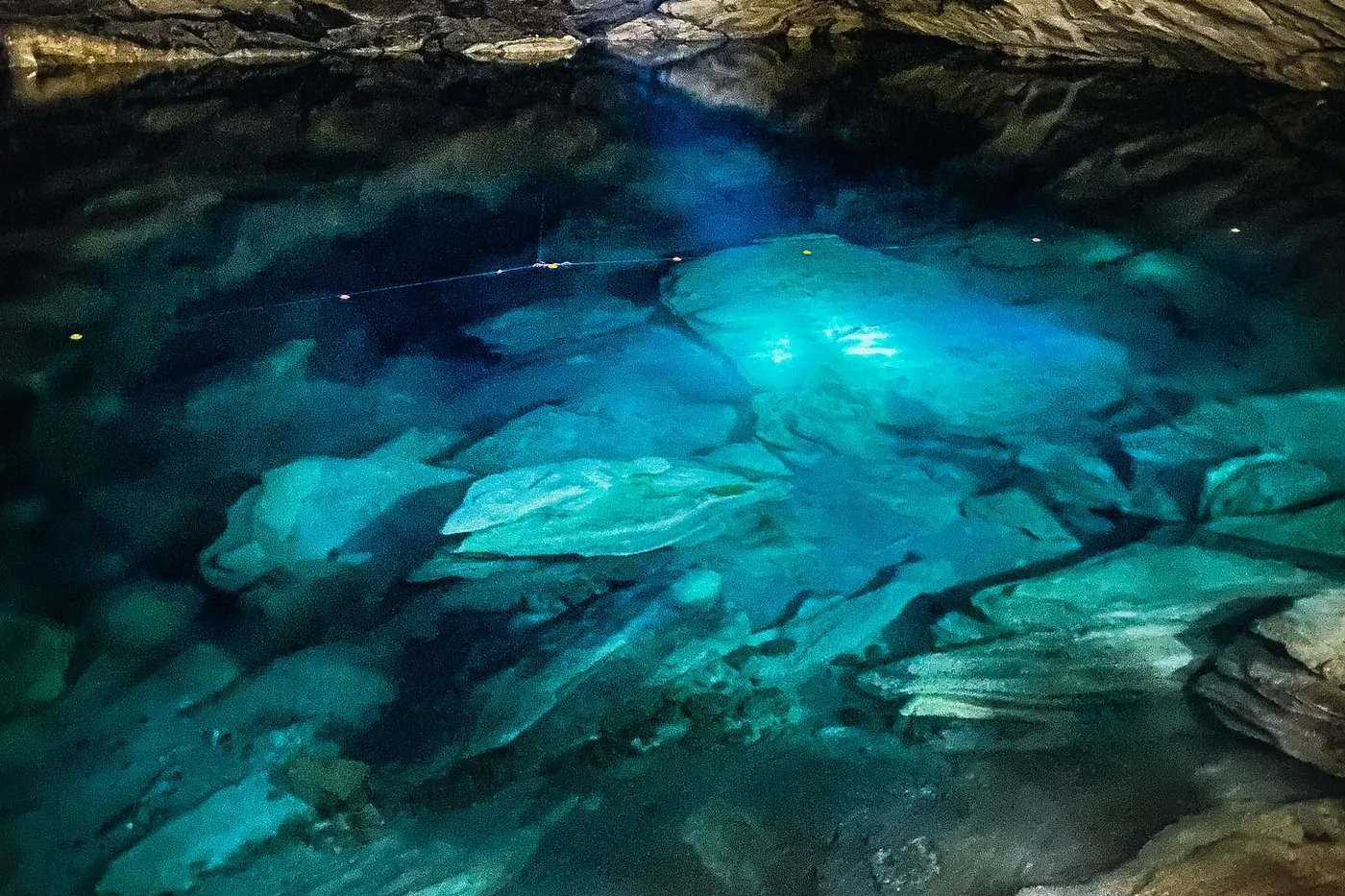
Nil Diya Pokuna, which translates from Sinhala as “Blue Water Pond,” is a hidden gem among Sri Lanka’s natural wonders. Deep inside a cave system near Karandagolla, a short journey from Ella in the Uva Province, a crystal-clear freshwater pool glows in shades of blue about 80 metres below the surface. This is no casual roadside stop. Getting there takes real stamina and a trustworthy guide to lead the way. But for those who take on the challenge, the payoff is a secret underground world that very few travellers ever get to witness.
A place wrapped in legend has a way of calling to curious travellers. We pack our bags and set off, driven by the need to see it with our own eyes. And Nil Diya Pokuna has no shortage of legendary tales. Remember the Ramayana, the tale of Rama, Ravana, and Sita? Some believe this is where King Ravana hid Sita after carrying her away from Rama. Walk through the underground tunnels and their strange formations, and find yourself wondering about it. Whatever the truth, the locals call the surrounding area Ravana’s land, and nearby you’ll find both a Ravana Waterfall and a Ravana Cave.
If you’d like to see the Ravana Waterfall while you’re in the area, a half-day tour from Ella covers it.
Hidden Gem Found
Until around the year 2000, almost no one had heard of this place. It was discovered entirely by accident. A local boy noticed a stream of air rising from the ground and, curious, began playing with it, tossing leaves over the opening. To his delight, the wind lifted them and set them floating. Bursting with excitement, he shared the discovery with the elders.
Soon, another group of young people visited the spot, and together they cleared away the layer of rubbish covering the opening. What they found surprised them. A passage leading downward. Instead of turning back, they chose to explore further, and that was the beginning of the adventure we enjoy today.
How to visit Nil Diya Pokuna
Nil Diya Pokuna lies about 15 km from Ella, and getting there is simple.
If you’re planning to base yourself in Ella, there are plenty of places to stay close to the cave.
From Colombo
You can take the Colombo-Wellawaya bus and continue along the Wellawaya-Ella-Kumbalwela highway to reach the destination. If you prefer the train, Ella is your station. From there, catch a bus along the same highway.
From Badulla
It’s an easy trip to Ella, with buses running regularly on this route. The journey by train or bus takes around 30 minutes.
Finding the cave
Nil Diya Pokuna is also known as the Karandagolla Cave, and your starting point is the Karandagolla School Junction on the Badulla-Wellawaya road. From there, follow a lovely, shaded green road for about 1.5 km, a walk that is a pleasure in itself. When you reach the “Ravana Ella Sanctuary” board, continue another 700 metres towards the forest, with birdsong as your soundtrack.
Once you step into the cave, the exploration of the pond takes around 45 minutes, and the whole journey, start to finish, takes about 2.5 hours. Deep inside the mountain cave at Karandagolla, the pond waits roughly 80 metres below the surface. Visitors may stay in the cave for a maximum of 1 hour 45 minutes.
Nil Diya Pokuna Ticket Price
Entry to Nil Diya Pokuna is charged per person, and rates differ for locals and foreign visitors. Children under 10 are not permitted inside the cave, and tickets must be collected from the ticket counter.
- Adults: Rs. 1000 for locals and 15.05 USD for foreigners
- Children above 10: Rs. 500 for locals and 7.5 USD for foreigners
Your ticket covers head torches, flashers, and guide supervision. Your duty is to return the equipment safely. If you’d like to buy lunch locally, let the guides know beforehand so they can arrange it.
Descending into the Pond: Guidelines
Meet your guide
Going with a guide is mandatory. You’ll find guides waiting at the ticket counter, so you can join a full guided tour with them on the spot. They provide head torches, flashlights, and helmets, and they are trained in first aid and safety.
Before you go in
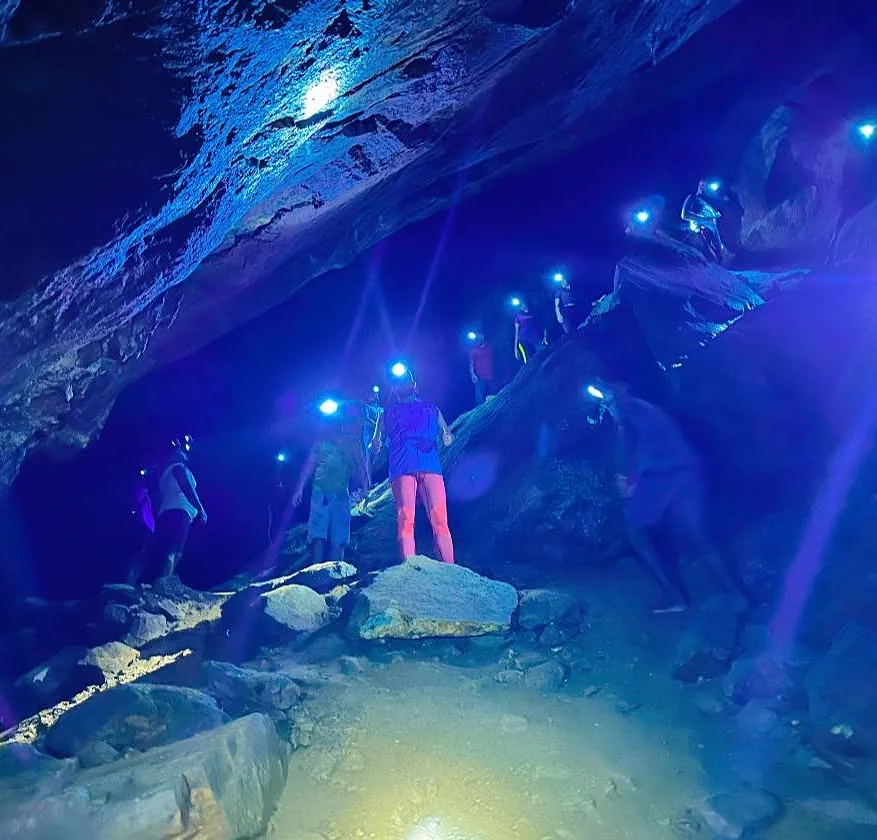
Dress appropriately. Slippers aren’t recommended. If you don’t have hard-soled shoes, going barefoot is better than wearing slippers. Expect your clothes to get dirty and sweaty, and pack swimwear if you’d like to bathe in the blue water. Put on your headlight and leave your backpack behind before entering. You’ll descend backward along a ladderlp of a rope. It is sturdy, so there’s no need to worry. Always follow your guide’s instructions. Further down, there is a ladder to climb down as well. The floor is slippery, so don’t jump on the rocks. Take every step slowly and smoothly.
Into the cave
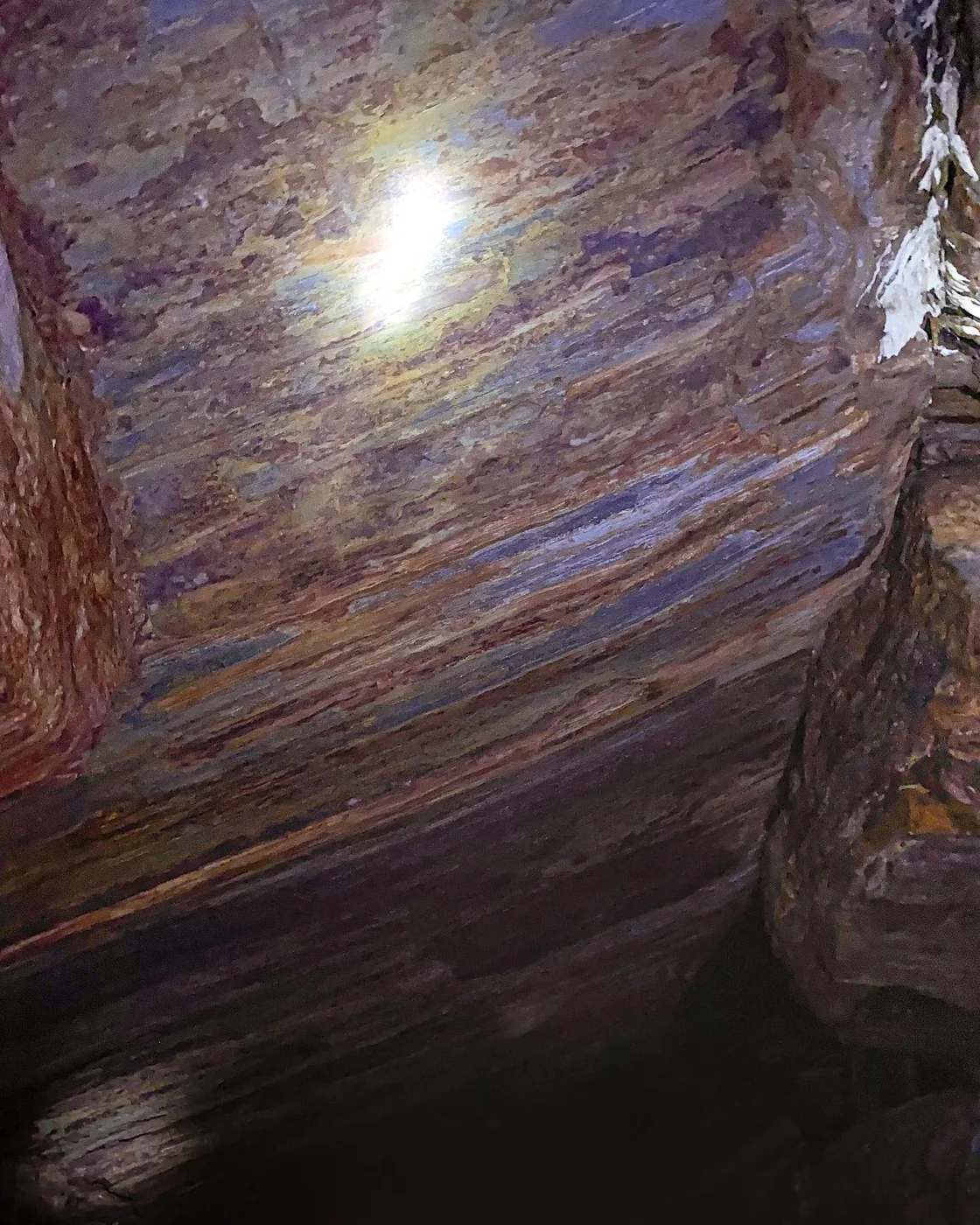
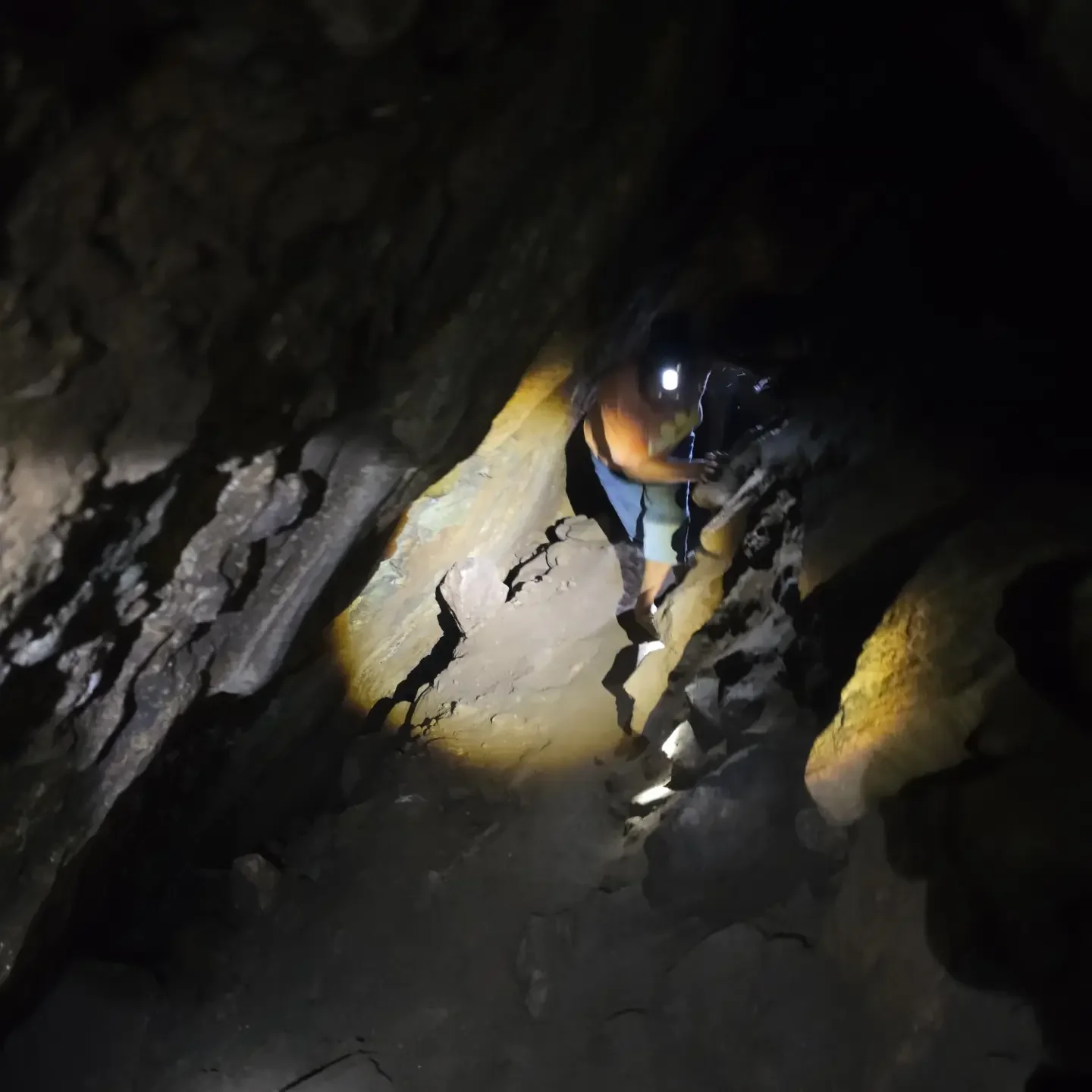
In some places, you’ll need to duck your head to pass through. Once you do, you’ll step into a spacious hall. From here, it’s an 800-metre walk to the pond. Somewhere along the way, your guide will point out the polished ceiling above you, which follows you all the way from the hall to the pond. Strangely, there is no wind down here, so how did the rock get so smooth? Look closely, and you’ll see layers of calcium carbonate built up over thousands of years. Your guide will also show you some curious patterns on the roof, one of which looks a lot like a human figure.
Challenges within the Cave Depths
What’s that smell? Don’t worry, it’s just bat guano. As you move deeper, you’ll hear flocks of bats overhead, their calls echoing like a cascading waterfall inside the cave. For ages, this has been a kingdom of bats and flies, and we are the intruders disturbing their peace. At times, flies may buzz around your face. Your head torch is usually enough to keep them from landing on you, but a head net is a great extra layer of protection, so you can forget about insects altogether. With bats swooping past, total darkness, and endless narrow passages winding ahead, the cave becomes the perfect setting for a ghost story. Don’t you think?
Top Activities at Nil Diya Pokuna
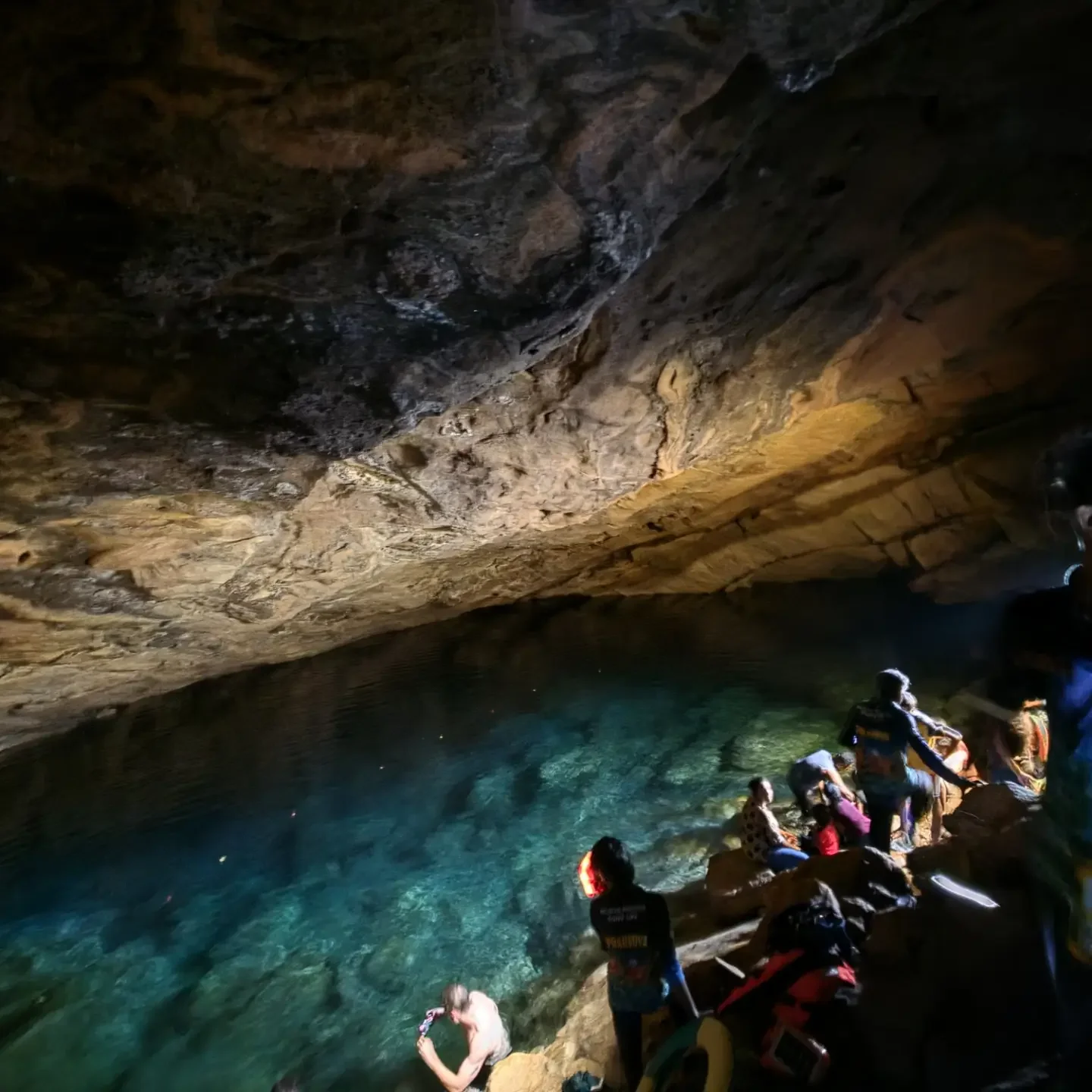
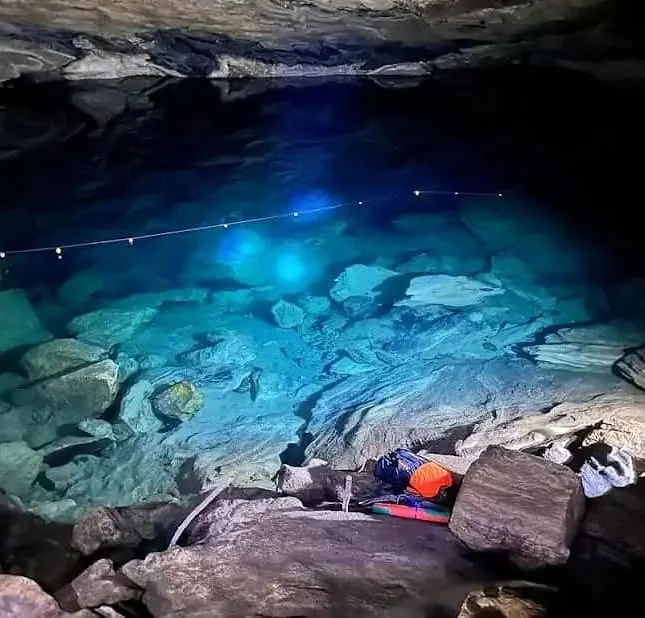
Ahead, something glimmers in shades of blue. Yes, that’s the water. Calm and crystal clear, it lets you see all the way to the rock bottom, and its mesmerizing blue is the perfect reason for the name Nil Diya Pokuna. In fact, it’s hard to tell where the pond begins. And don’t let the beauty and stillness fool you. In some areas, the water is 40 to 50 feet deep, and during the rainy season the level rises. Watch for the warning lines in the water and stay within the safe limits. Without sunlight, there are no plants or fish here.
If you step in, the water may reach your shoulders. It is icy cold, and in a place with no daylight, time can slip away without you noticing, so look after yourself. There are no emergency exits in the cave, which makes it very difficult to help someone who gets injured.
When to visit Nil Diya Pokuna
The most dependable time to explore Nil Diya Pokuna is the dry season, from December to March. With less rain, the cave passages are unlikely to flood or become waterlogged, and the trail leading to the entrance is much easier to walk.
Ella sits at a moderate elevation and catches rain from both monsoons, so a heavy downpour can turn the cave dangerous and sometimes completely impassable. You can still go during the inter-monsoon or wetter months, but check conditions with the locals before you attempt the descent.
Plan to go in the morning if you can. Afternoon thunderstorms are common in the hills during the transitional seasons.
Final Thoughts
So, go and experience what I’ve shared here for yourself. It is challenging and adventurous, and when you complete the journey, the beauty of the place will leave you buzzing with joy. Take care out there. If even one of you decides to visit Nil Diya Pokuna after reading this article, that is the greatest reward I could ask for.
Cheers, fellow travellers, and goodbye until the next adventure!