Disclosure: This article contains affiliate links to tours, tickets and other Sri Lanka travel services. If you book through one of them, we may earn a small commission at no extra cost to you. It never changes what we recommend.
During the eleventh and twelfth centuries, Polonnaruwa, Sri Lanka’s second capital after Anuradhapura, became very important, with a massive increase in architecture-related technology. The Ancient City of Polonnaruwa was added to the UNESCO World Heritage List in 1982. It’s a large area with many ruins, monuments, and sacred Buddhist temples.
Here is what you need to know before visiting, including how to get there, what to see, how much time to allow and how to make the most of your visit.
Where Is Polonnaruwa Located?
Polonnaruwa is in Sri Lanka’s North Central Province and is part of the island’s Cultural Triangle. This town is well connected to other popular destinations, so it is commonly included in itineraries covering Sigiriya, Dambulla, Anuradhapura, and Kandy. So, if you are travelling around the Cultural Triangle, you can visit Polonnaruwa as a day trip, although staying overnight makes the experience much less rushed.
How Can You Get into Polonnaruwa?
From Colombo to Polonnaruwa
Travelling from Colombo to Polonnaruwa takes several hours, depending on the route and traffic. I once took a night train to Polonnaruwa, arrived around 6 AM, and was completely lost without a bus to my accommodation. So, for visitors doing a larger Cultural Triangle trip, I would not recommend travelling from Colombo to Polonnaruwa for just a day. It is much more comfortable to combine it with destinations such as Sigiriya or Dambulla.
From Sigiriya to Polonnaruwa
This is one of the easiest combinations. You can stay around Sigiriya or Habarana and travel to Polonnaruwa in the morning. After visiting the ancient city, you can either return to your accommodation or continue towards the eastern or central parts of the island. If you are travelling in summer, heading to the eastern coast is a great option after Polonnaruwa.
If you’d rather not self-drive or arrange buses, a private half-day tour from Dambulla covers the main sites with a guide.
From Kandy to Polonnaruwa
You can travel from Kandy to Polonnaruwa by road, but I wouldn’t recommend squeezing it into a tight itinerary with Sigiriya or Dambulla. If you are travelling solo, check your transport connections before leaving Kandy. Buses can be inexpensive, but the journey takes around 5 hours. For families or small groups, hiring a car with a driver can make more sense because you can stop at other places along the way.
What to See While Exploring the Ancient City of Polonnaruwa?
Polonnaruwa has a lot to see, but you don’t have to visit every ruin to appreciate ancient Sri Lanka’s architectural wonders. The ancient city of Polonnaruwa has two entrances; I used the one close to the main road because I was travelling by bus. Since I started pretty early, there were no crowds, and as a Sri Lankan, I didn’t have to buy a ticket, but if you are a foreigner, you’ll need to buy one at the gate. Tickets cost 30 USD for adults and 15 USD for kids over 6.
I have added a map of the places I visited; you can choose what you want to visit depending on how much time you have.
1. Sacred Quadrangle
The Sacred Quadrangle is the first set of ruins you come across as you enter the Ancient City’s grounds if you come from the side of the main road.
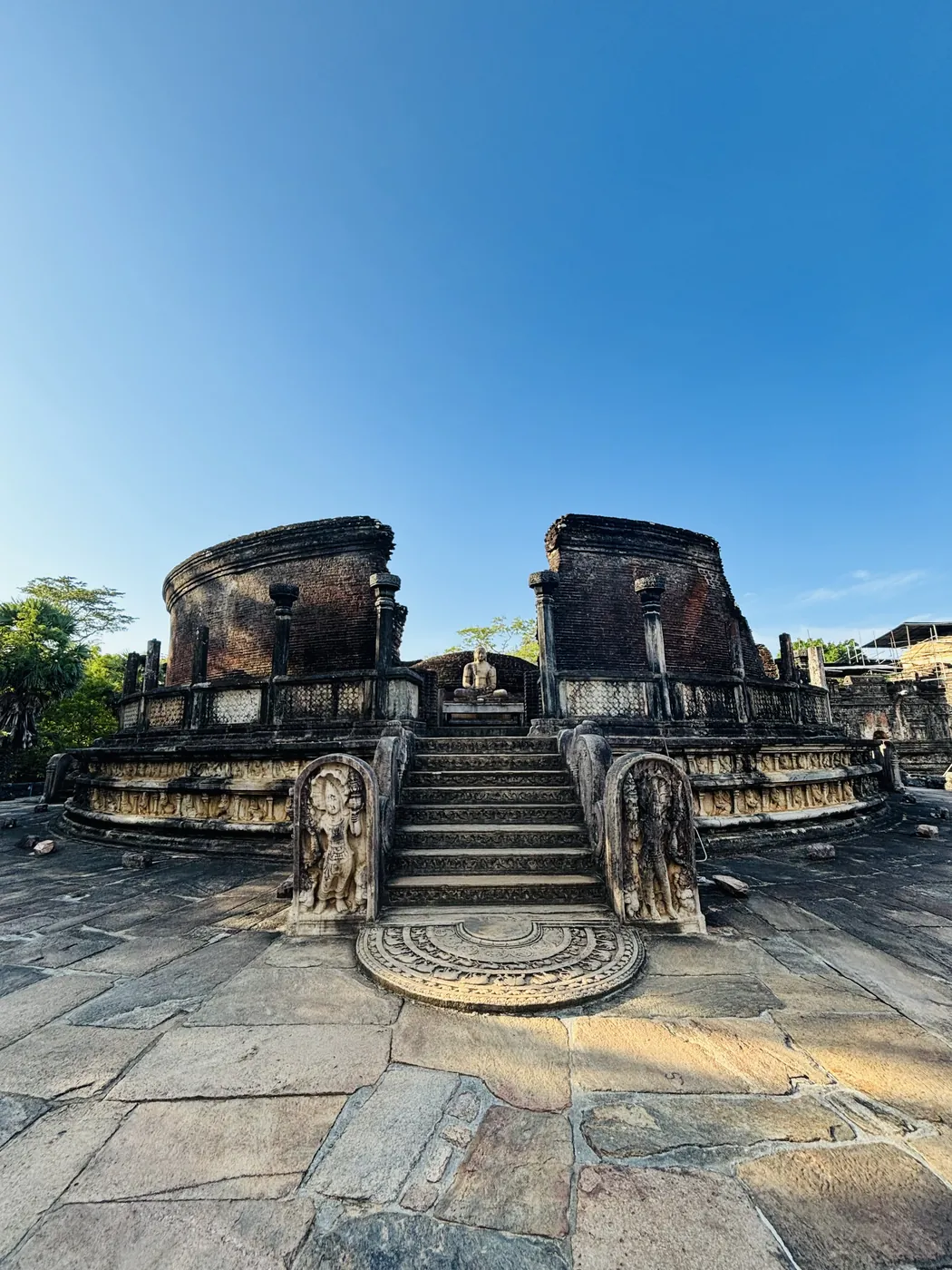
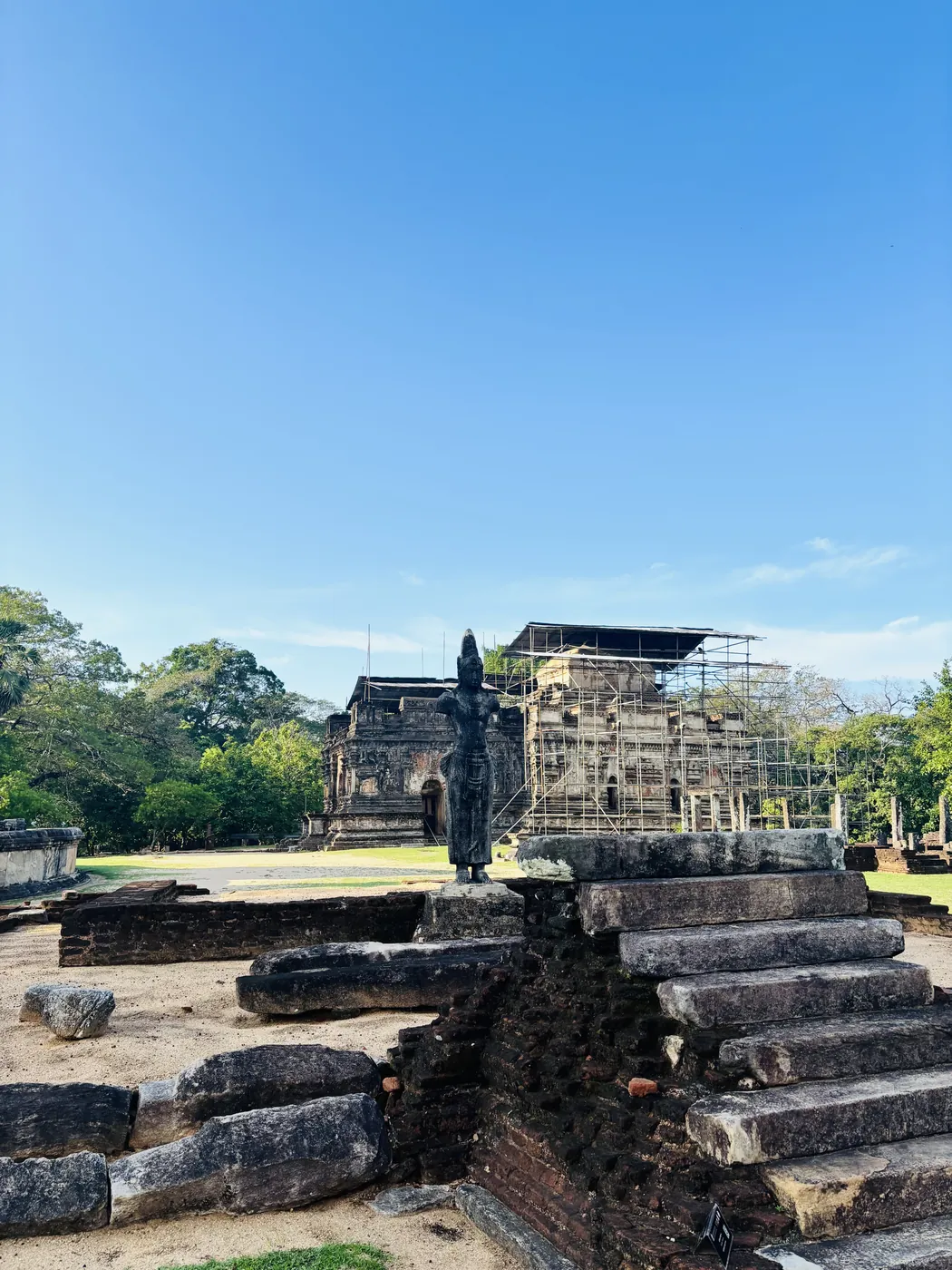
The Sacred Quadrangle is a small collection of stunning and striking ruins enclosed by a wall on an elevated platform. Any visitor should not miss this collection of buildings, which is the most concentrated in the entire Ancient City! The craftsmanship shows the importance placed on religious architecture during the Polonnaruwa period.
The Vatadage, a circular relic house typical of its sort, is located in the centre of the Quadrangle. The outermost terrace features four entrances, each flanked by massive, immaculate guard stones, and measures an astonishing 18 meters in diameter. A central dagaba of Vatadage features four Buddhas at each entrance.
2. Nishshanka Latha Mandapaya
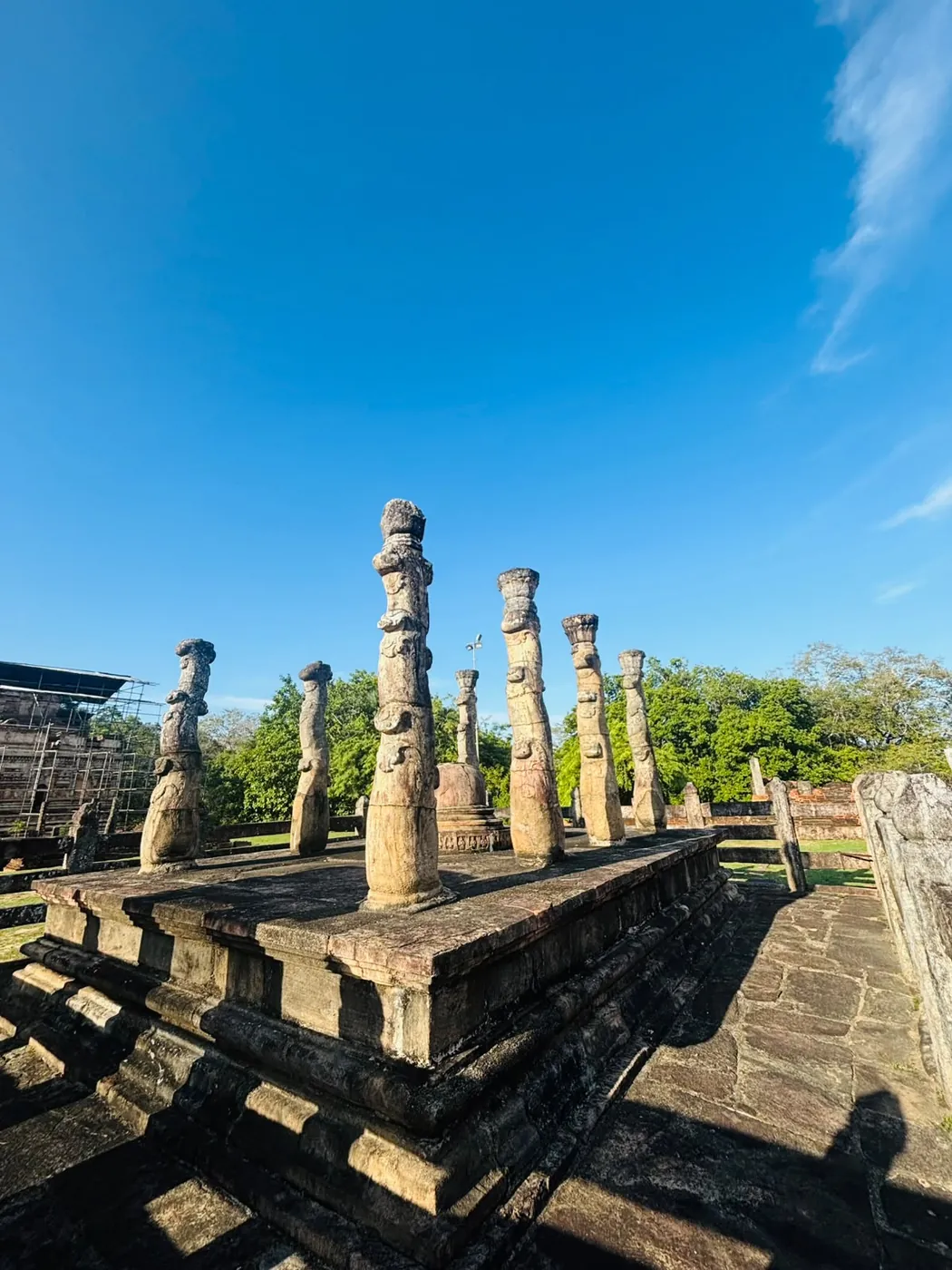
Nissanka Latha Mandapaya in Polonnaruwa is a remarkable example of 12th-century architecture built during the reign of King Nissanka Malla. It is famous for its distinctive curved stone pillars that resemble petrified lotus stems. This elegant structure, known as a Kuludage, was used as a royal pavilion for performing Pirit chanting. It includes a central stone stupa and a complex stone structure made of posts and rails. The most notable feature of the Nissanka Latha Mandapaya is its unique curvilinear stone pillars, which were designed to look like lotus stalks. This design is rare in ancient Sri Lankan architecture and marks a departure from the traditional octagonal or rectangular pillars commonly found in earlier Anuradhapura-style buildings.
3. Royal Palace
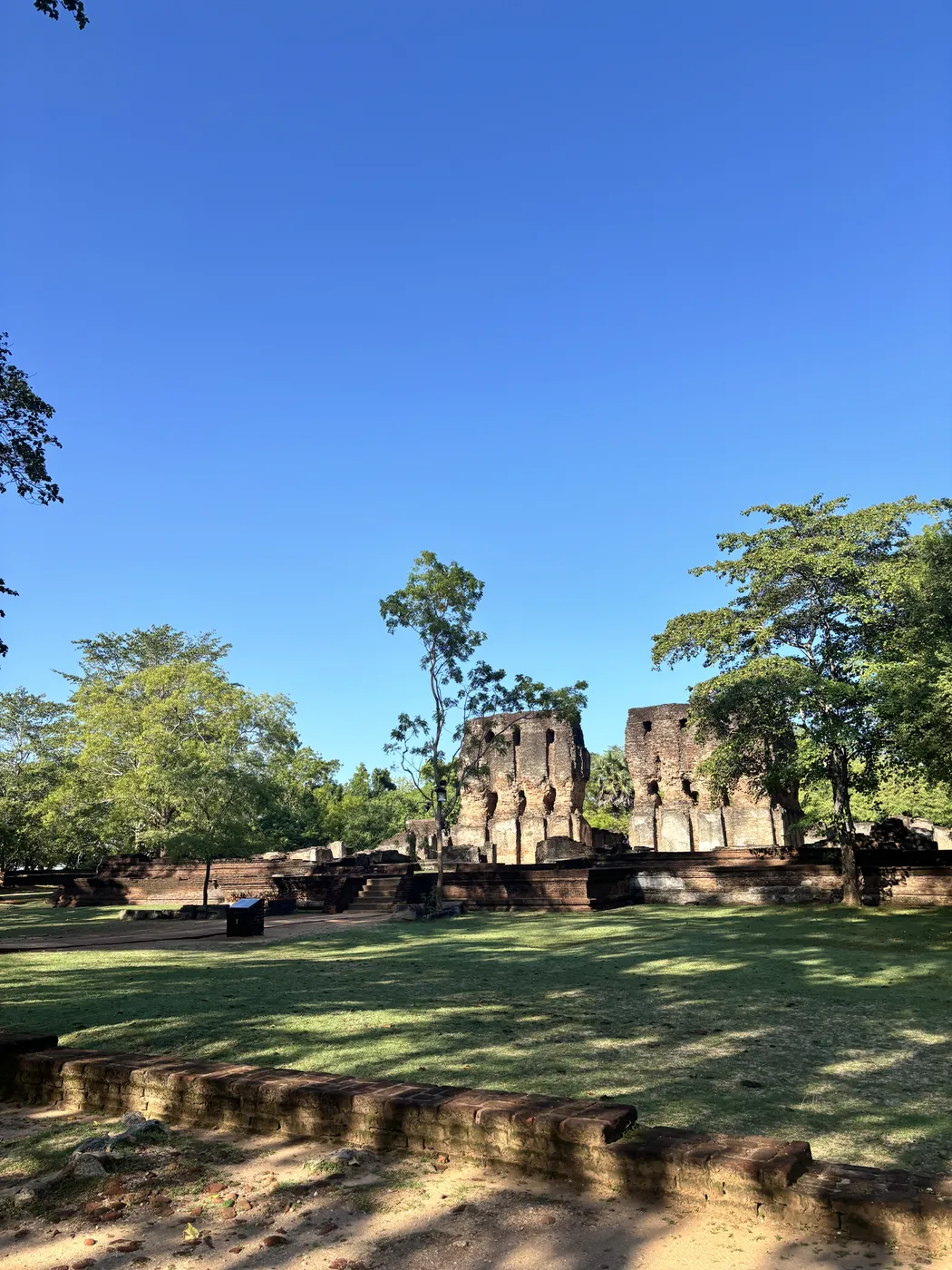
King Parakramabahu I (1153–1186) built this collection of structures. Measuring 31 by 13 meters, the King’s Royal Palace once housed 50 chambers supported by 30 columns. It is still a spectacular structure, but imagine it originally stood seven stories tall, with walls three meters thick, as archaeologists claim!
With openings to support floor beams for two additional floors, just a portion of the walls remain today. The archaeologists surmise that the building must have been constructed of wood if it had four more stories above these stone walls. It was amazing to construct such a large palace back when there were no machines!
4. Audience Hall (Council Chamber)
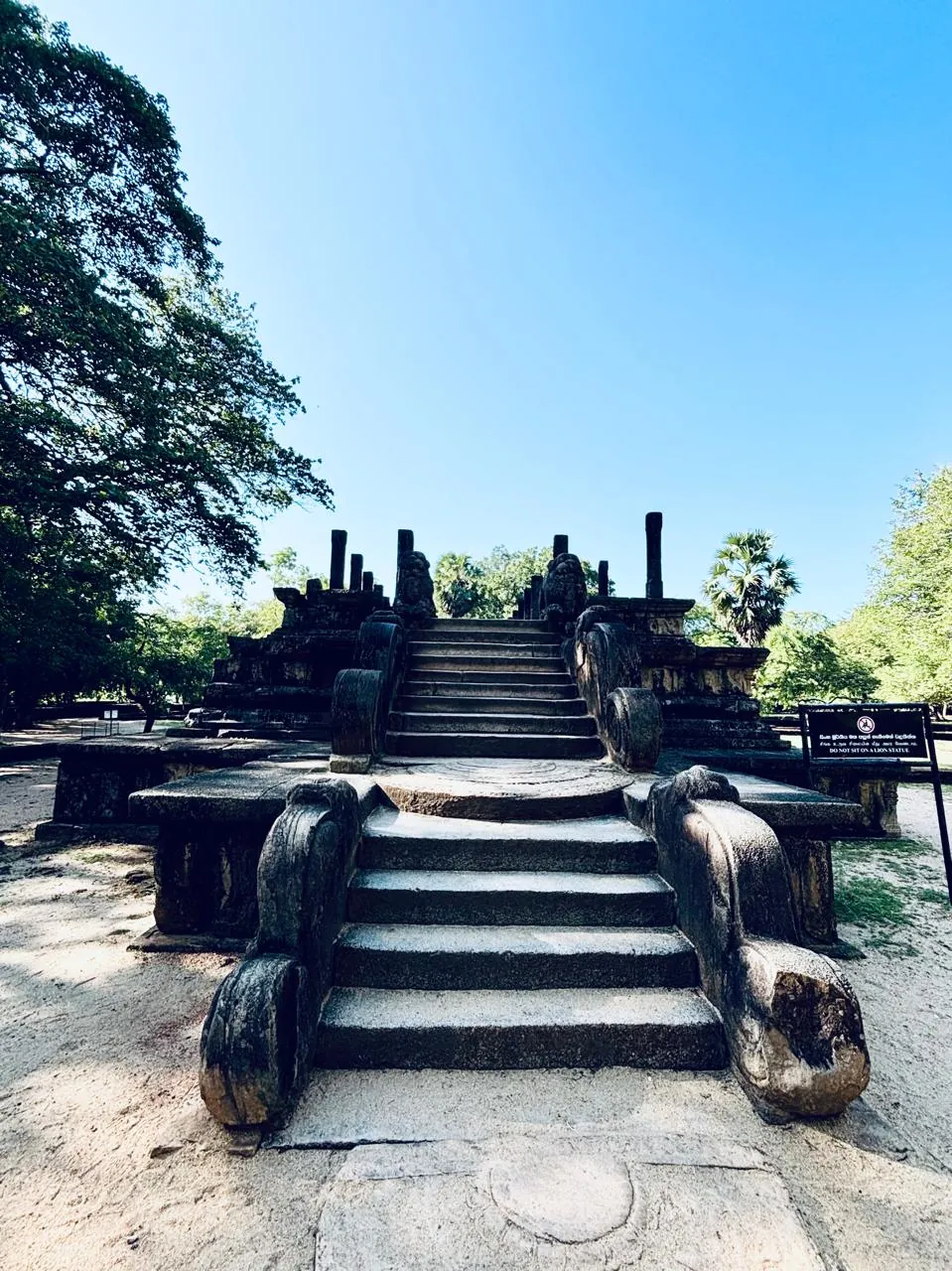
It’s just a few meters away from the main palace; it’s a well-preserved building, with a lot of carvings made on stone. You can see the tiny carvings on each stone pillar. What makes it beautiful is that it’s all hand-carved. With lovely lions atop either side, the stairs leading to the Audience Hall were rather stunning.
5. Rankoth Vehera
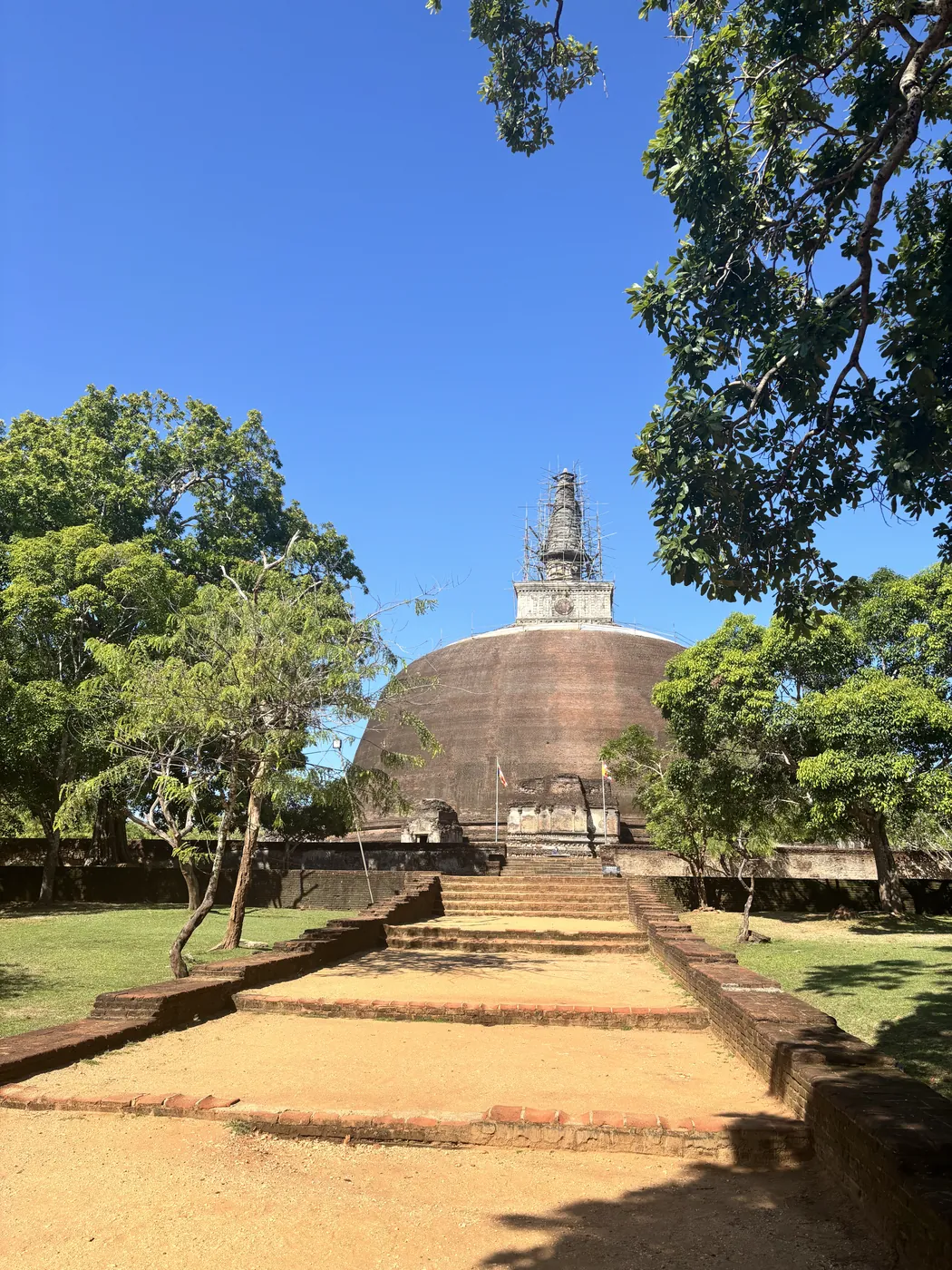
The impressive Rankoth Vehera is the largest stupa in the ancient city. It’s made entirely from brick and was built during the reign of King Nissanka. It is different from the smaller monuments in the Sacred Quadrangle and gives you a better sense of the scale of religious construction during the period.
The surrounding area is relatively open, so an early-morning visit is even more comfortable.
6. Lankathilaka Viharaya
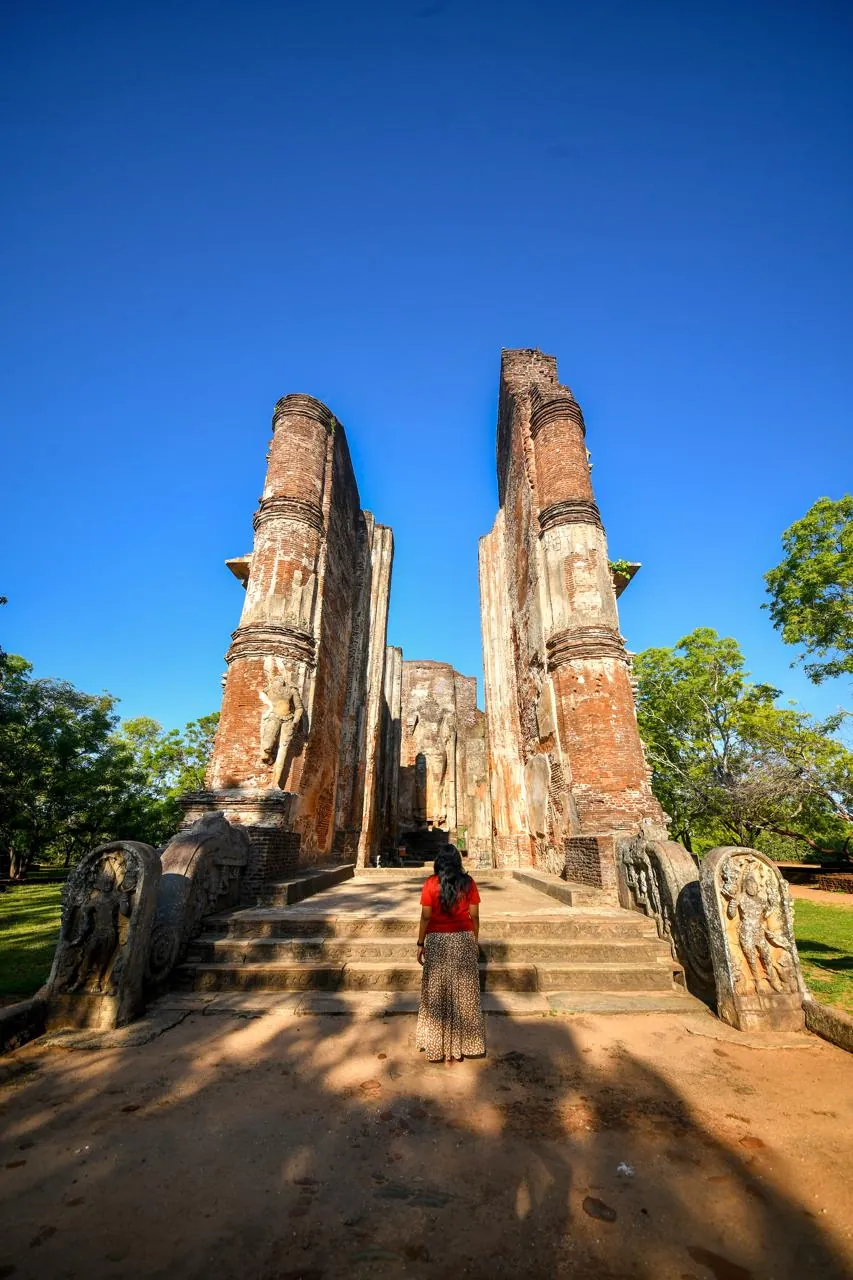
Lankathilaka Viharaya features a large Buddha statue carved from a single piece. According to the Mahawansa, King Parakramabahu built it between 1153 and 1186. Inside the temple, a large room holds four Buddha statues, each facing a different direction. The building is constructed entirely of brick, with its external walls decorated with intricate carvings and ornamental details. The most noticeable feature is the large Buddha statue at the main entrance.
The tall brick walls and entrance create a completely different atmosphere from the open stupas and smaller stone monuments. Take a little time to look at the brickwork and proportions of the structure. It is easy to focus only on the famous statues in Polonnaruwa, but buildings like Lankatilaka show another side of the city’s architecture.
7. Gal Viharaya
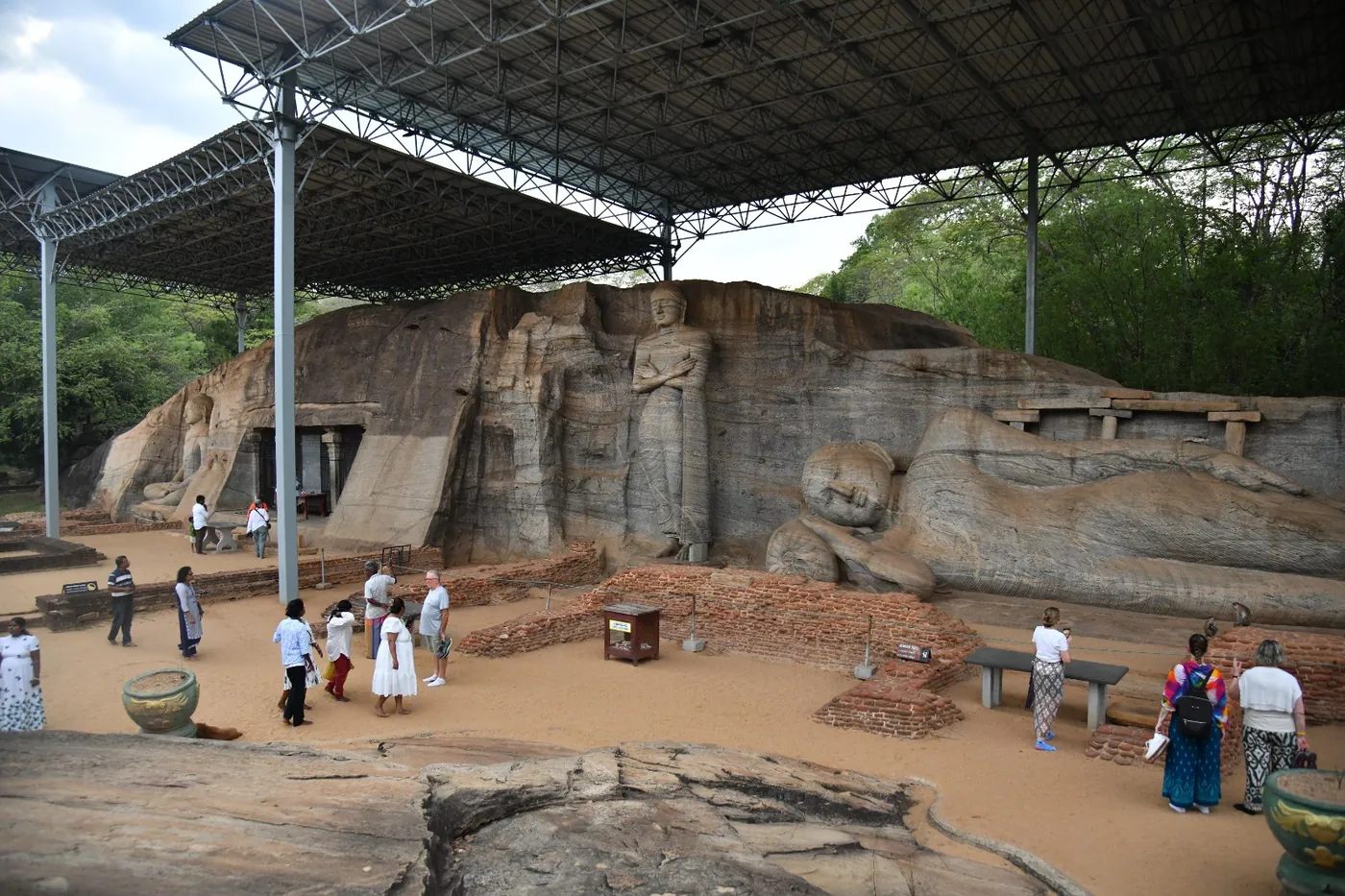
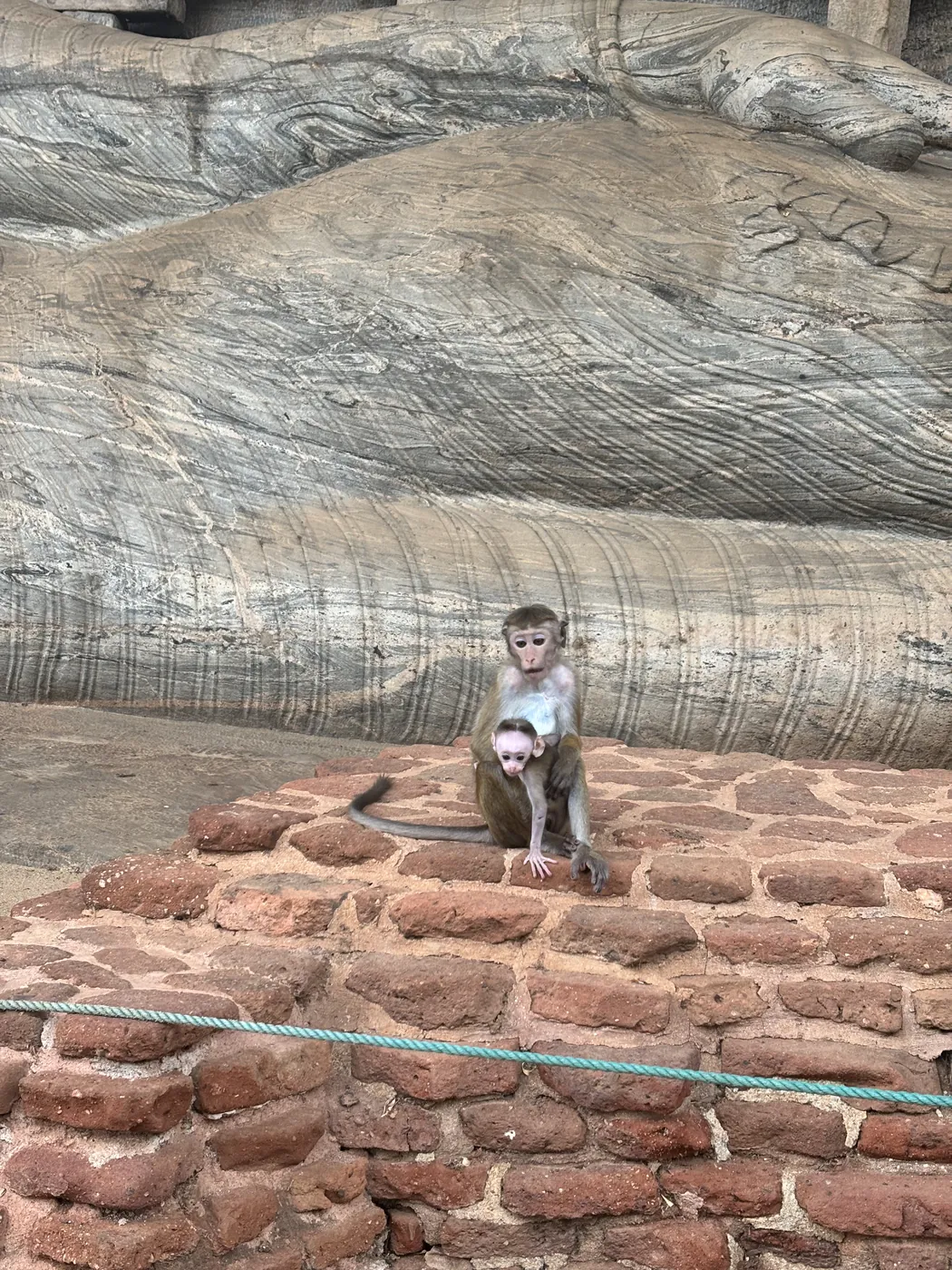
Gal Vihara is likely Polonnaruwa’s most well-known attraction.
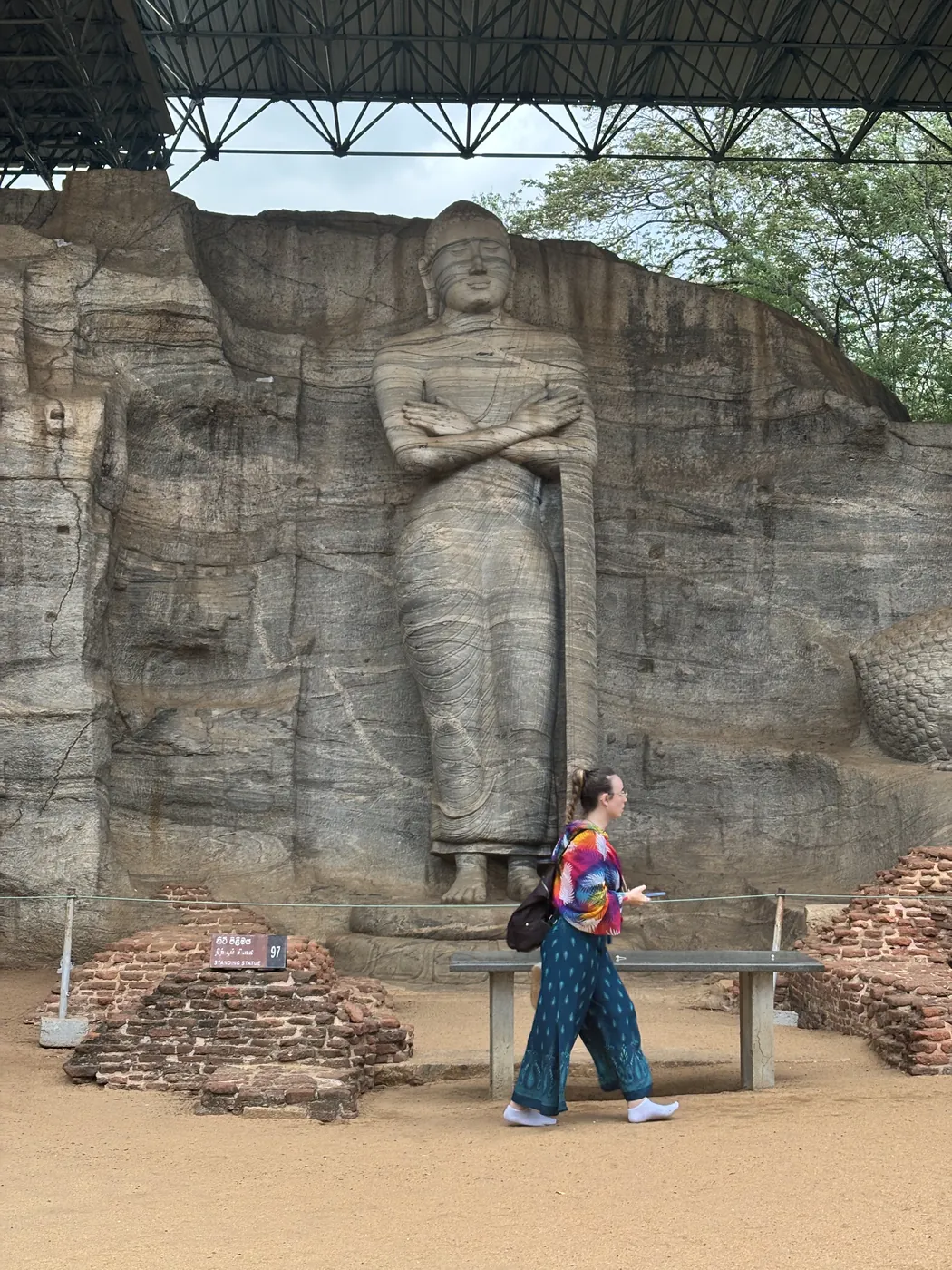
Constructed in the 12th century by King Parakramabahu, this remarkable temple features four large Buddha statues, all meticulously carved from solid rock. The largest is a standing Buddha, 14 metres tall, making it one of the world’s largest rock-cut Buddha statues.
The level of skill involved in creating these statues is impressive, even for those who aren’t especially interested in history or archaeology. The reclining Buddha is a particular favourite among visitors, but it’s also worth taking time to explore the other figures. The intricate stone carvings are best appreciated when viewed up close. Keep in mind that this is a place of worship, not just a spot for taking photographs. Dress modestly and follow the site staff’s guidance.
8. Thivanka Pilgrimage House
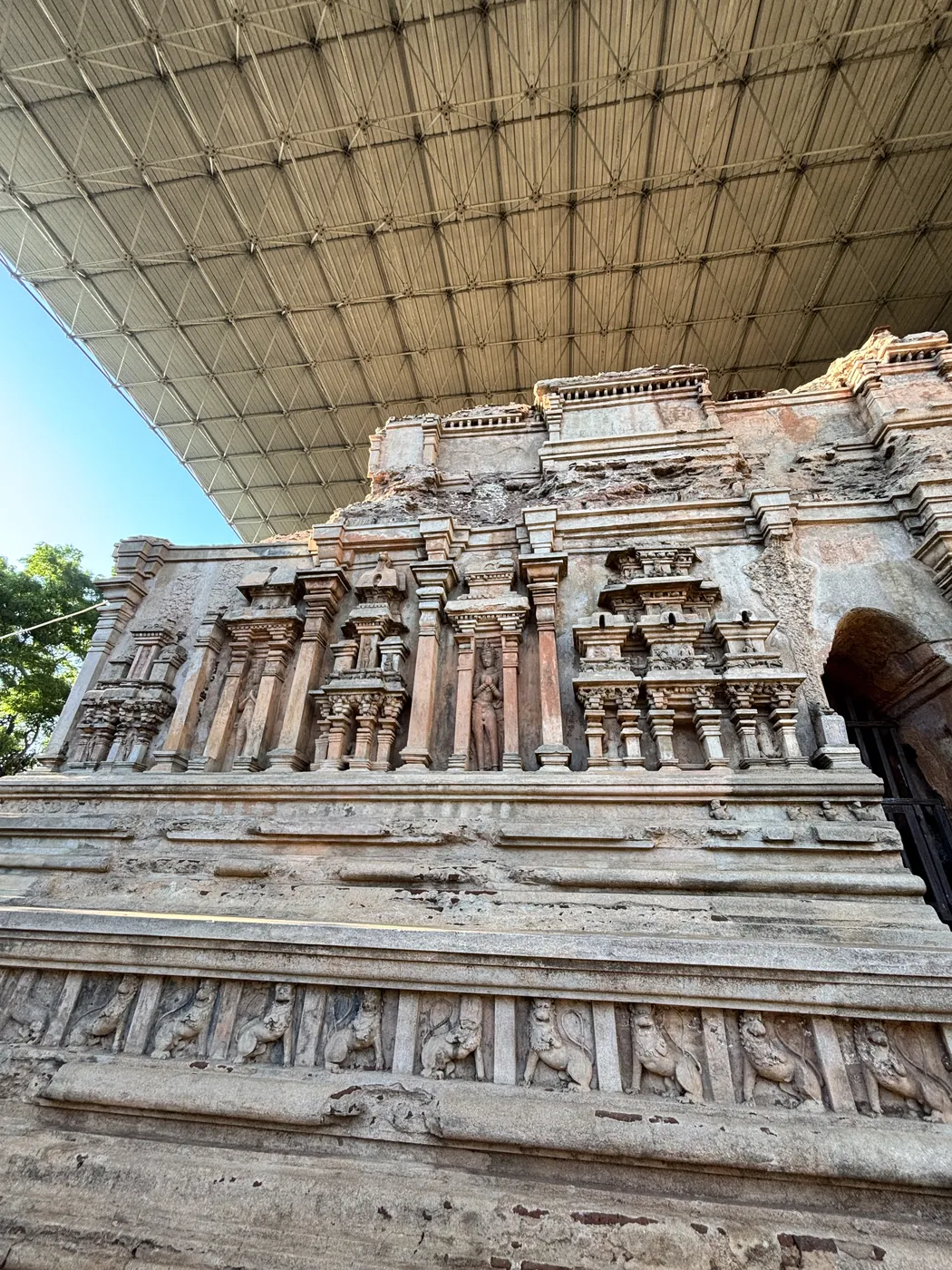
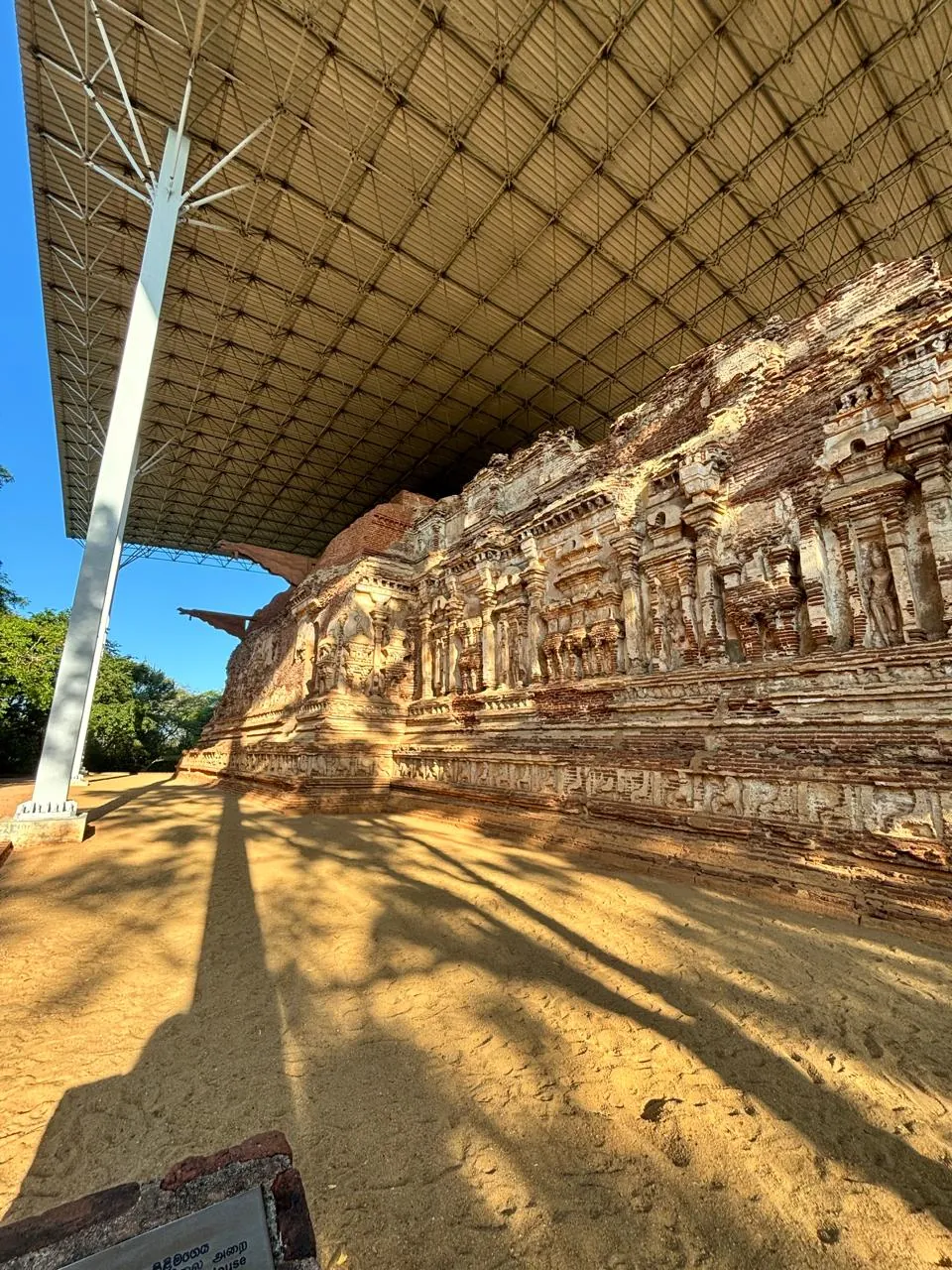
This was the final ruin I visited inside the ancient city, as it sits at the very end of the road through the archaeological site. Although it is only one building, it is one of the most intricate and extravagant. The exterior is beautifully and masterfully carved. Inside, where we weren’t allowed to take pictures, stands a giant stone figure of one of the goddesses. Painted on the walls, but hardly visible now, are scenes of kings from a bygone era. The remnants of the gold-embossed imagery are still a sight to behold.
Polonnaruwa Archaeological Museum
I would recommend visiting the museum before exploring the ruins. If you have never visited an archaeological site in Sri Lanka before, the museum can make the ruins much easier to understand. I didn’t visit it because I arrived very early and was too tired to walk back to the museum after exploring the ancient city of Polonnaruwa.
According to the Central Cultural Fund, the Polonnaruwa Museum is open daily from 7:00 am to 6:00 pm.
Statue of King Parakramabahu the Great
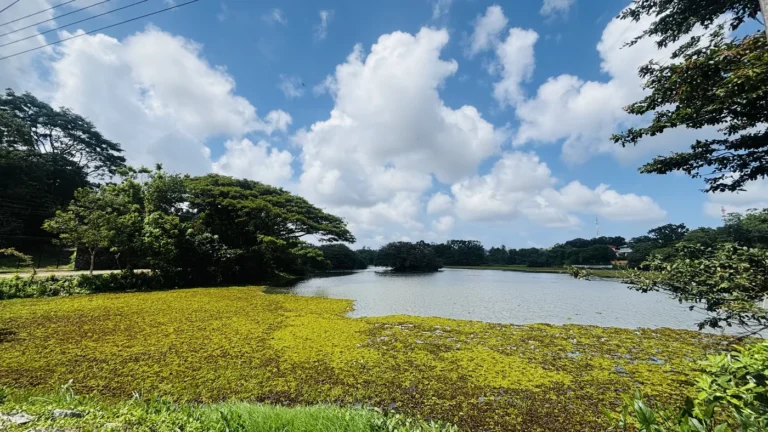
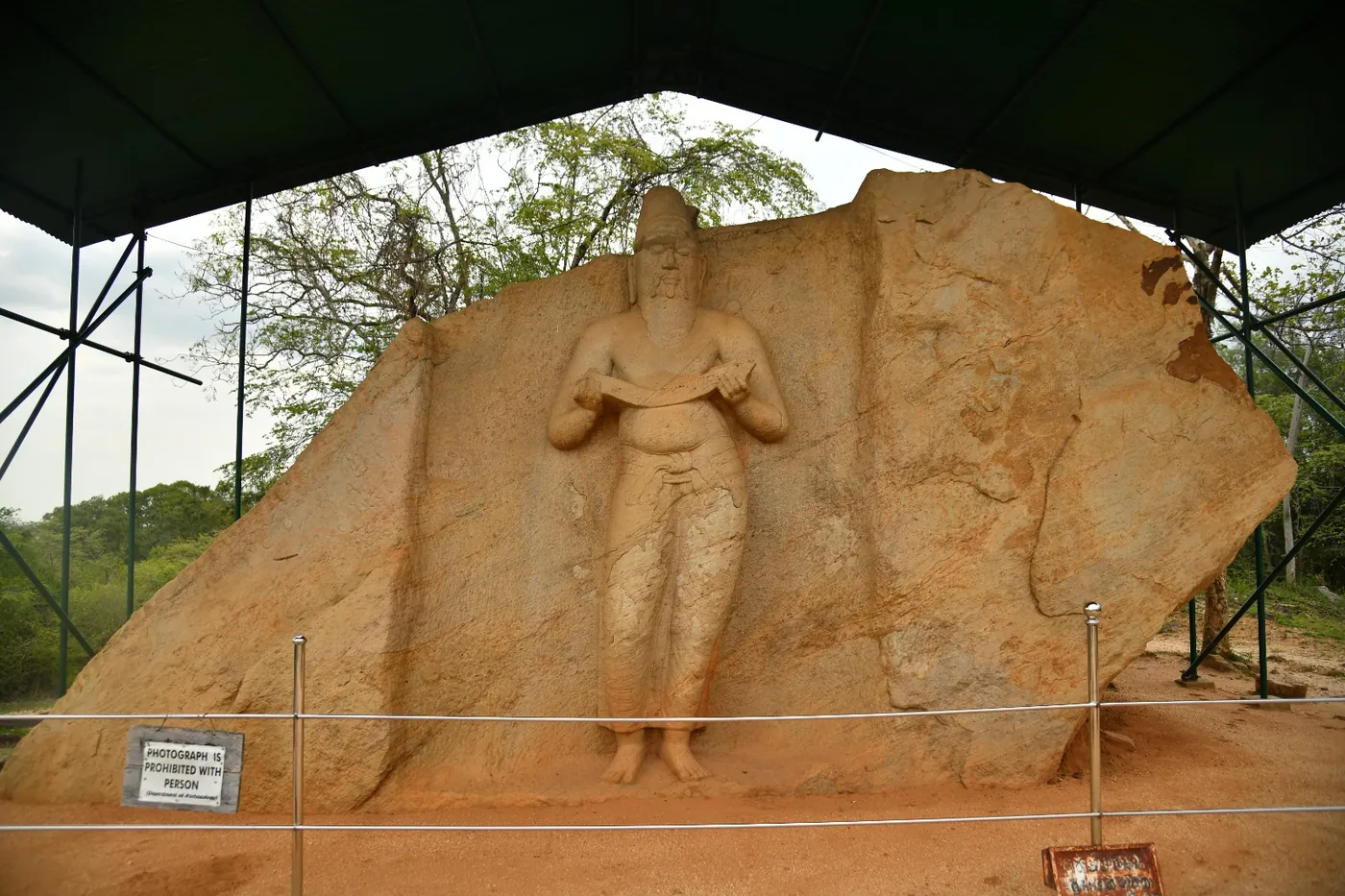
If you have time, you can also visit this statue outside the city limits. The statue depicts an austere figure holding what is thought to be an ola leaf manuscript. One of the finest historical statues on the Island, the monument measures over 11 feet in height. Although the statue’s identity has not been confirmed, many believe it depicts King Parakramabahu because it stands near one of his greatest works, the Parakrama Samudraya Reservoir.
However, some say the statue depicts the great Sage Rishi Pulasthi, the paternal grandfather of King Ravana. The presence of what is thought to be a Brahmanical sacred thread running from the figure’s left shoulder across the body, and the Ola leaf book in his hands, supports this belief.
Getting Around Polonnaruwa Ancient City
This is where I think many first-time visitors underestimate Polonnaruwa, including myself. The ancient city itself isn’t a single, compact attraction. The ruins are spread across a fairly large area, so transport becomes important. You can walk around some sections, but I would not recommend trying to walk between every monument, especially during the hotter months.
Bicycle
Cycling is one of the nicest ways to explore Polonnaruwa. You can rent a bicycle in Polonnaruwa. You can find them near both entrances. If you start from the town, you can also rent scooters. Many hotels in the Polonnaruwa area also offer bikes to rent, so check with your accommodation if you plan to stay overnight. If you rent a bike, you can stop whenever you want, avoid waiting for a vehicle and enjoy the quieter roads between the monuments.
Tuk-tuk
A tuk-tuk is a practical option for travelling alone, as a couple, or with a plan. You can arrange a driver for several hours and ask them to take you between the major sites.
Agree on the price before starting. If you want to travel to the ancient city from the town, there are PickMe and Uber as well.
Car and Driver
For families, older travellers or anyone visiting Polonnaruwa as part of a larger Sri Lankan itinerary, a car with a driver is probably the easiest option. You can combine Polonnaruwa with other nearby attractions without worrying about finding transport at every stop.
What Should You Wear in Polonnaruwa?
Polonnaruwa contains active religious sites, so dress respectfully.
Men and women should cover their shoulders and knees when entering sacred areas. A lightweight cotton outfit, hat, and comfortable walking shoes are mandatory; the footpaths can be very hot during the day, so I recommend bringing socks. Walking barefoot on hot stone is not very pleasant!
What to Take With You?
Here is a packing list for a day exploring the ancient city of Polonnaruwa.
- Sunscreen
- Hat or umbrella
- Sunglasses
- Comfortable walking shoes
- Socks for temple areas
- Insect repellent
- Small towel
- Power bank
- Some cash
- Plenty of drinking water & snacks
Don’t assume every part of the archaeological area will have what you need nearby. And there are a lot of Toque monkeys that are ready to steal your food. So if you have snacks, just don’t leave your bags unattended.
The Central Cultural Fund also advises visitors to avoid bringing polythene and plastic containers into the heritage site and to dispose of waste properly.
Best Time to Visit Polonnaruwa
Polonnaruwa is in Sri Lanka’s dry zone so it can be hot.
The best time of day to explore is generally early morning. I would rather wake up early and see the ruins before the strongest midday heat than arrive at 11 am and spend the whole visit looking for shade.
Responsible Travel in Polonnaruwa
One thing I would really encourage visitors to remember is that Polonnaruwa is not an abandoned movie set.
It is a protected archaeological site and contains religious monuments that are still treated with respect by Sri Lankan Buddhists. Do not climb on monuments, touch statues unnecessarily or write on ancient stone.
Photography also has rules. The Central Cultural Fund specifically states that photographs taken with one’s back facing Buddha images, or that touch them disrespectfully, are prohibited. Commercial and professional photography requires prior permission from the CCF.
Drone and filming restrictions also apply at heritage sites, and you need prior written approval for filming and drone cameras. This is particularly important for photographers, content creators and travel bloggers.
Is Polonnaruwa Worth Visiting?
Absolutely, especially if you want to see Sri Lanka beyond beaches and scenic train rides.
What I like about Polonnaruwa is that you can see several sides of Sri Lanka’s history in one place. You’ll find massive stupas, beautifully carved stonework, ancient monasteries, royal buildings, and an enormous irrigation system that is still part of the landscape.
And unlike some attractions where you spend most of your time standing in a queue, Polonnaruwa gives you room to explore. For anyone travelling through Sri Lanka’s Cultural Triangle, Polonnaruwa deserves at least half a day, and ideally a full day. It is one of those places where the more you look, the more you notice.